 Florence City Guide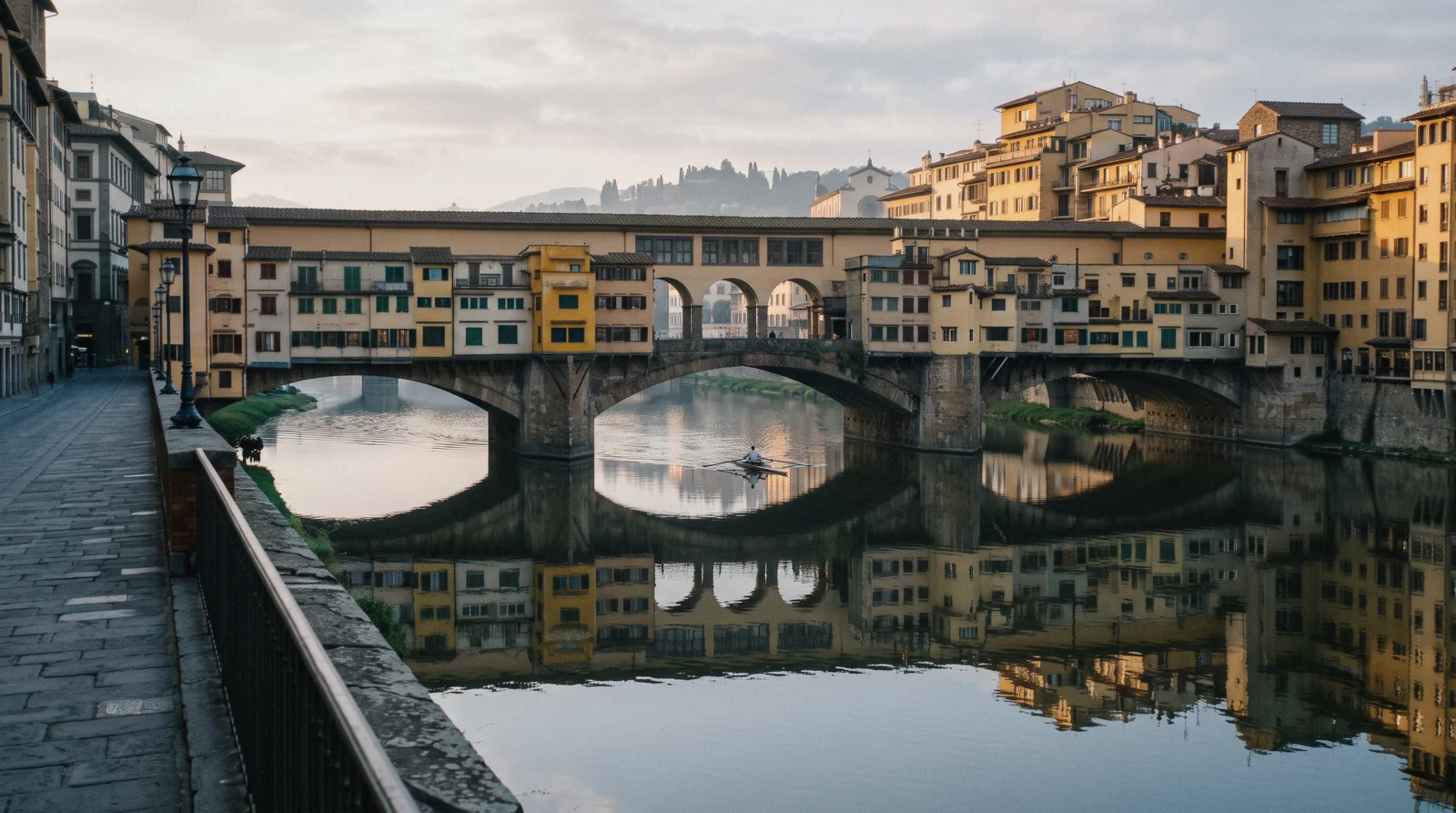
Ponte Vecchio
The Ponte Vecchio (pronunciation: [ˈponte ˈvɛkkjo], "old bridge") is the stone bridge that has carried Florence over the Arno at the river's narrowest point since about 1345, and the only one in the city the German army left standing in 1944. It costs nothing, it has no gate and no closing time, and the shops on it have been goldsmiths' by decree for more than four centuries. This page covers what you are looking at, when to be there and where to stand; the raised passage above the shops has its own page. It is one of the places covered the same way across what to see in Florence.
Quick answer Free, always open, two minutes to cross — the real questions are when and from where
The Ponte Vecchio is free, has no opening hours and takes about two minutes to walk across. It is the 1345 stone bridge over the Arno lined with goldsmiths' shops, and the only bridge in Florence that survived the German retreat of 4 August 1944.
Key takeaways
- Nothing to buy and nothing to book: the bridge is a public street. The one paid thing here is the passage above the shops, and how that ticket works is a page of its own.
- The photograph everyone wants is not taken from the bridge but of it — stand on Ponte Santa Trinita at sunset or on Lungarno Torrigiani in the morning, as the four viewpoints explains.
- Most guided highlights walks cross it mid-route for the price of a museum coffee, and the street-food walk works the lanes at either end; after the bridge, Palazzo Pitti is six minutes straight on.
Key facts
Opening hours
| The bridge, all year | Always open — no gate and no closing time |
|---|---|
| The shops on the deck | Not published by any authority; typically mid-morning to about 19:00 (our observation) |
Closed None — the bridge never closes
Admission
- Adult
- Free
- Reduced
- —
- Free
- Everyone; the passage above the shops is ticketed separately
Planning it
- Time needed
- Not stated by any authority; our routing: 10 minutes to cross and look, 30 minutes if you take in the two river viewpoints
- Book ahead
- Optional — walk-up usually fine
- Address
- Ponte Vecchio, 50125 Firenze — Via Por Santa Maria on the north bank, Via de' Guicciardini on the south
There is no ticket for the bridge itself. It is a public street, free at any hour. These are our listings for crossing it with a guide, or for going over the shops inside the raised passage, with prices as the listings show them.
Are you crossing the bridge, or going over the shops inside Vasari's passage?
| Option | Price | Includes | Cancel | Book |
|---|---|---|---|---|
| Guided highlights walk, 90 minutesA first morning that takes in the bridge, the square and the cathedral outside | From €17 | Licensed guide, the bridge, Piazza della Signoria, the cathedral square | Free up to 24 hours before | Check Availability |
| Street-food walk with wine, 2.5 hoursVisitors who want the bridge with the food quarter around it | From €42 | Guide, tastings, the San Lorenzo lanes and the bridge quarter | Free up to 24 hours before | Check Availability |
| Small-group gallery tour with the corridor optionAnyone doing the Uffizi who wants the corridor as a decision made later | From €48 | Max nine people, priority entry, corridor walk as an add-on | Free up to 24 hours before | Check Availability |
Prices are the operators' listed 'from' figures, in euro, converted from the listed figure. There is no door to the passage on the bridge. It is entered from inside the gallery, as the corridor page explains. Figures current in Q3 2026.
Walks and tours that cross the bridge
No tour sells the bridge, because nobody can: it is a public street. These are the walks that build a route through it, with the operator's own rating and listed price.
 from €17
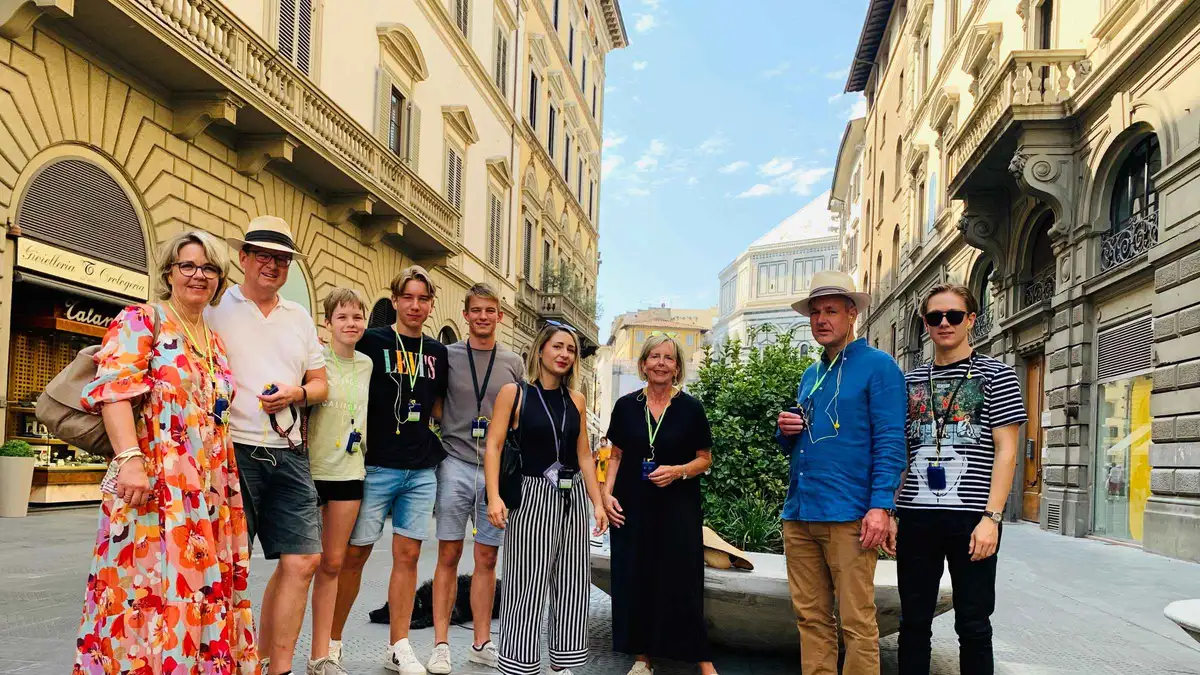
Florence: Highlights Walking Tour with Expert Guide
listed at $20.27
90-minute small-group highlights walk (Duomo, Piazza della Signoria, Ponte Vecchio) in 8 languages, with free luggage storage. Runs rain or shine.
Check Availability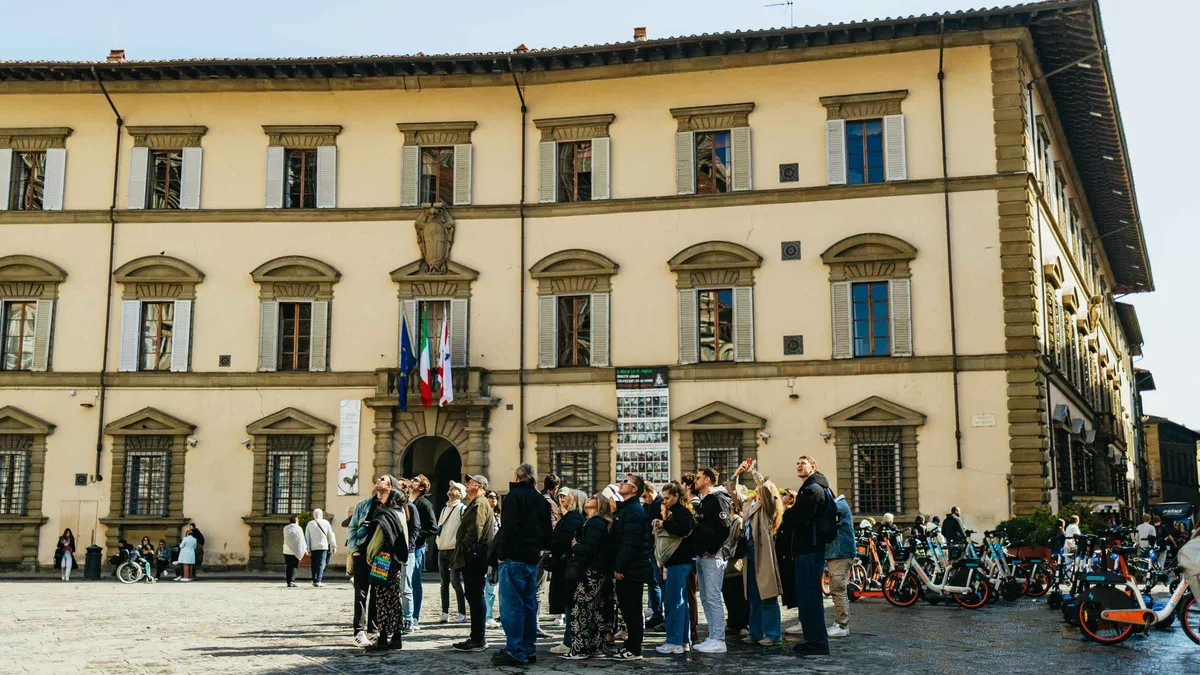 from €12
Top rated
from €12
Top rated
Florence: Renaissance and Medici Tales Guided Walking Tour
listed at $13.90
Two-hour storytelling walk on the Medici and the Renaissance in English or Spanish, ending with local eating and shopping tips. Cheapest tour here.
Check Availability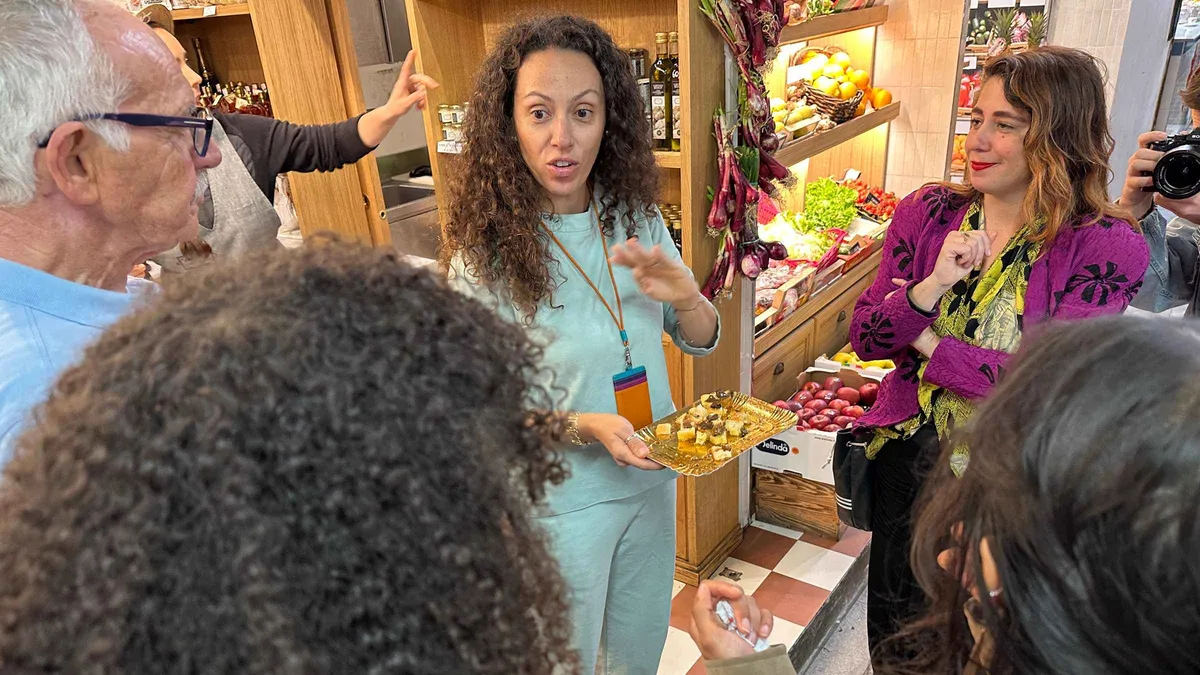 from €42
Top rated
from €42
Top rated
Florence: Street Food Tour with Wine & Local Guide
listed at $48.65
2.5-hour street-food walk through San Lorenzo Market and the Duomo area with several tastings and a sip of wine; morning only, no vegan or gluten-free.
Check Availability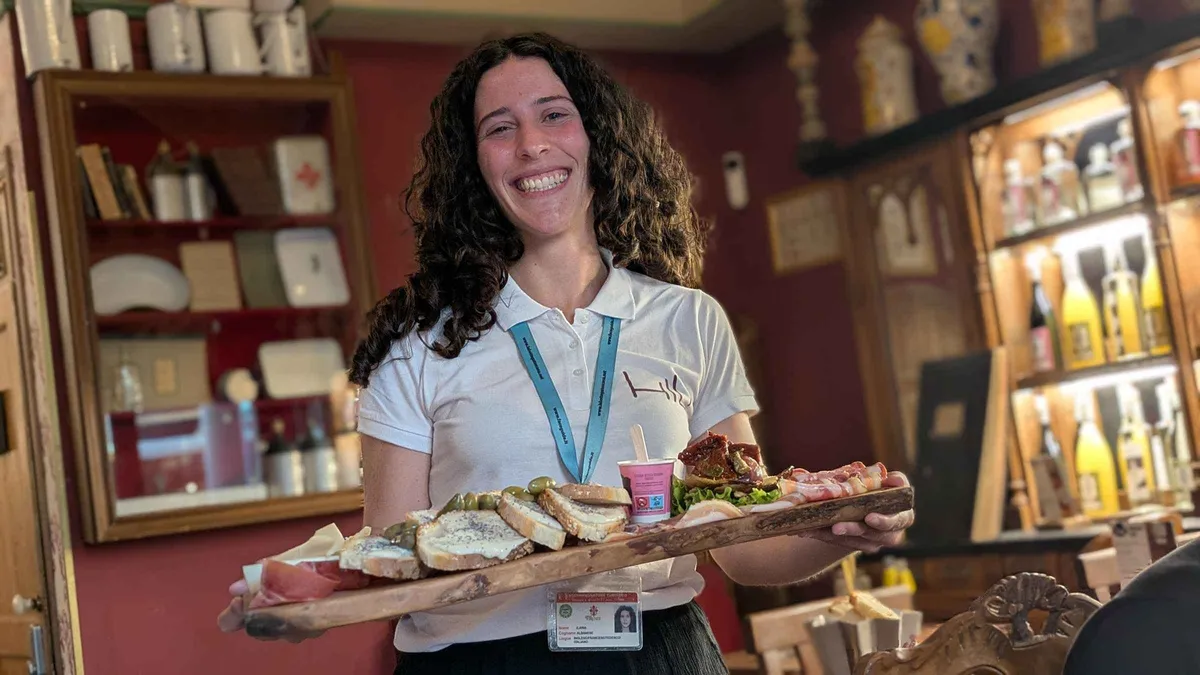 from €53
Top rated
from €53
Top rated
Florence: Street Food Walking Tour with Wine
listed at $62.55
2.5-hour licensed-guide street-food walk with tastings and drinks included, past the Duomo and Ponte Vecchio. Not for vegans or gluten intolerance.
Check Availability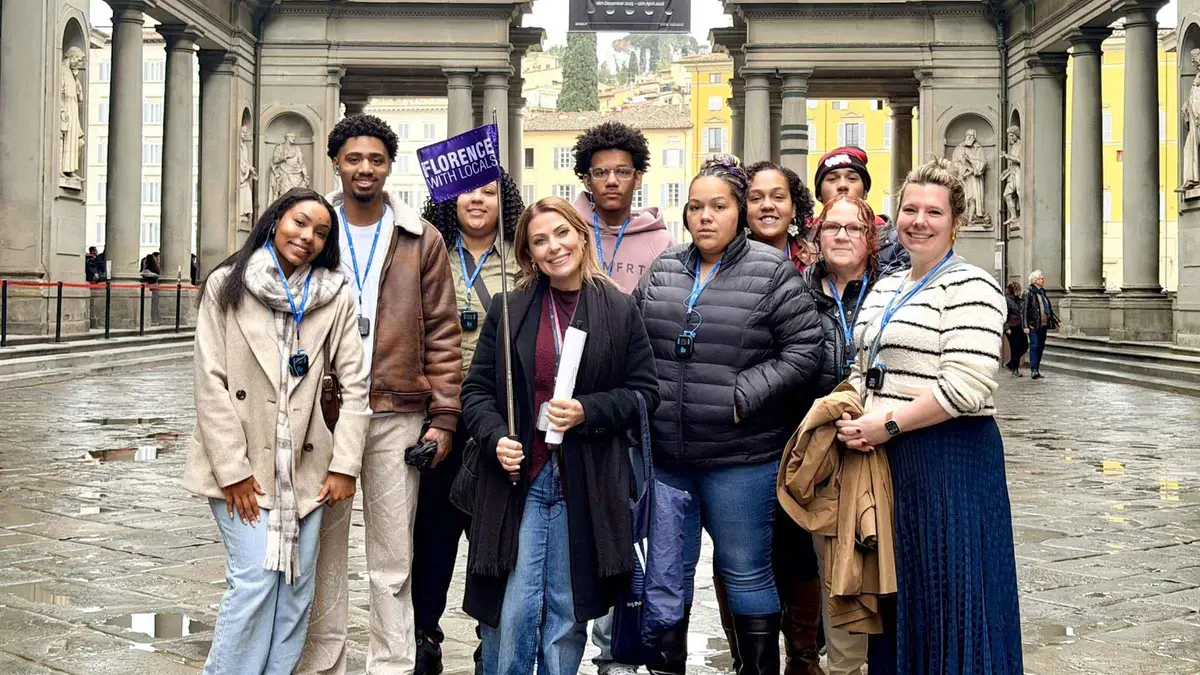 from €48
Uffizi Small Group Tour + Optional Vasari Corridor Access
listed at $55.61
Max-9 Uffizi tour with a licensed guide, with or without the one-way Vasari Corridor walk to Pitti. Museum base cost €29, or €47 with the corridor.
Check Availability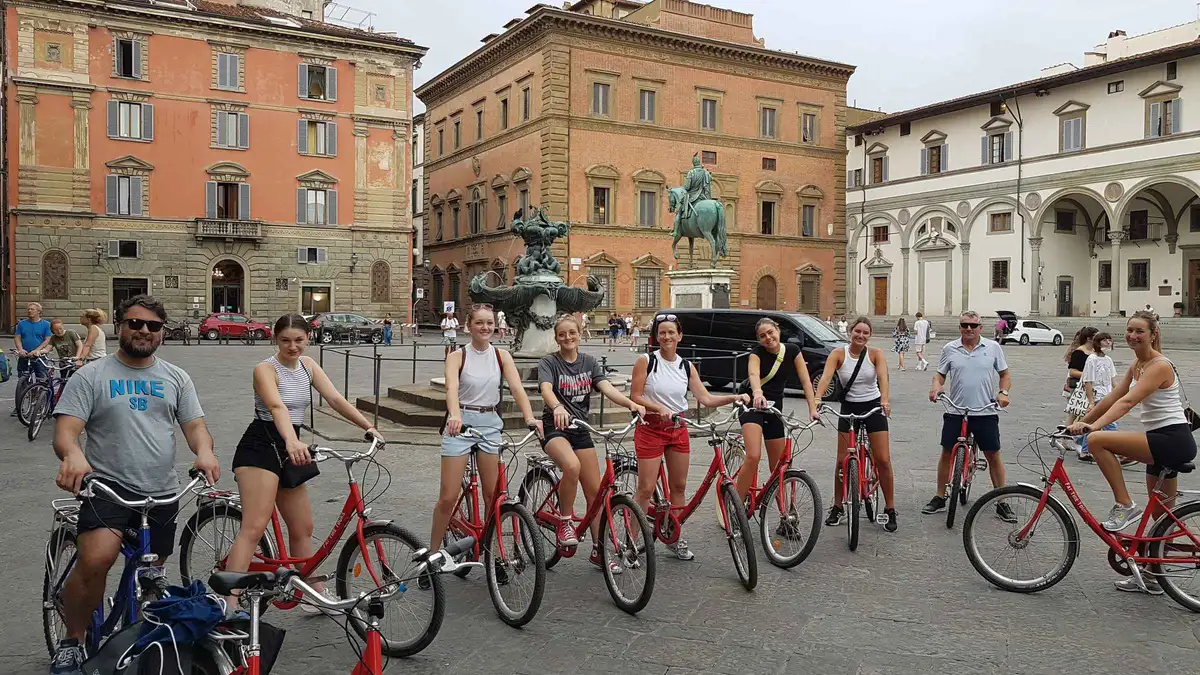 from €40
Florence: City Highlights Bike Tour
listed at $46.33
Three-hour guided bike loop past the Duomo, Santa Croce, San Niccolo and Ponte Vecchio; bike, helmet and guide included. Under-18s ride with an adult.
Check AvailabilityPrices, ratings and details are the platform's own. Dollar figures are the listed prices. The platform bills in your account's currency.
What you are standing on: a bridge from about 1345
Three shallow arches, two piers, a street of shops on top and an open gap in the middle where the parapet lets you see the river. Everything odd about the Ponte Vecchio comes from the fact that it was a working commercial street first and a monument second.
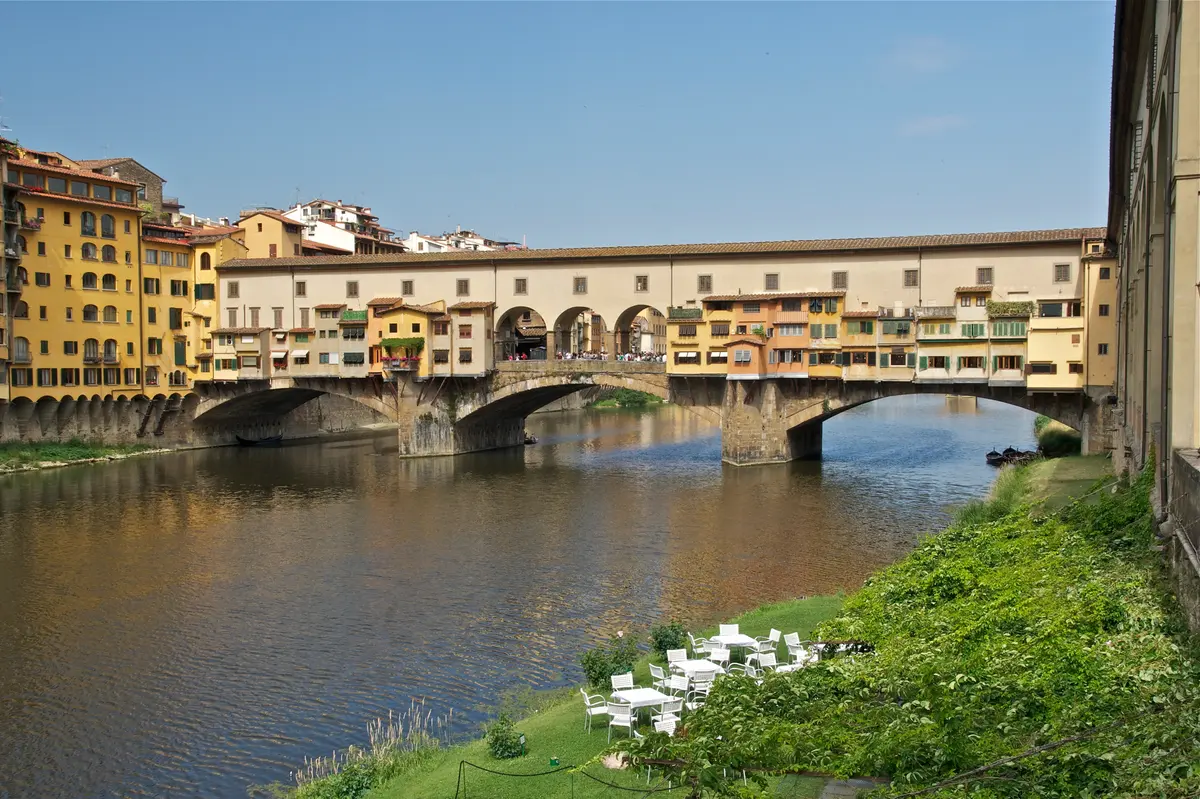
Photo: Jebulon, CC0, via Wikimedia Commons (http://creativecommons.org/publicdomain/zero/1.0/deed.en)
A crossing since Roman Florentia — and three floods
The Arno is at its narrowest here, which is why there has been a bridge at this spot since Roman times, when the via Cassia crossed the water on stone piers with a wooden deck above. The bridge first appears in a document of 996. A flood destroyed it in 1117 and it was rebuilt in stone; the flood of 1333 swept it away again except for two of the central piers, a loss Giovanni Villani recorded in his Nuova Cronica. The bridge you cross has stood since about 1339–1345.
The name is a comparison, not a boast. When the Ponte alla Carraia went up downstream in 1218 it was called the Ponte Nuovo, the new bridge, and the older crossing became the Ponte Vecchio by contrast. In the little loggia at the central opening there is a weathered dedication stone recording that the bridge fell in 1333 and was rebuilt ten years later at the Commune's pleasure.
Taddeo Gaddi by tradition, Neri di Fioravanti by modern reading
Giorgio Vasari, writing two centuries later, passed on the view of his day that the design was Taddeo Gaddi's, and most signs and guidebooks still repeat it — the city's own point-of-interest page says "probably designed by Taddeo Gaddi". Modern historians put forward Neri di Fioravanti as the more likely builder. Nobody has a document that settles it, so treat either name as an attribution rather than a fact.
The engineering is the reason the bridge is worth a second look. The three arches are segmental rather than semicircular: the main span is 30 metres, the two side spans 27 metres each, and the arches rise only 3.5 to 4.4 metres, a span-to-rise ratio of about five to one. Flat arches need fewer piers and give a gentler slope, which is what let carts cross without hauling up and over a hump. Leon Battista Alberti singled out the wide piazza in the middle of the deck as an ornament to the city; it is still the only place on the bridge where you can stand still without blocking anyone.
The tower, the plaque and the two lanes at either end
At the south-east corner stands the Torre dei Mannelli, built to defend the crossing and still stubbornly in the way — the raised passage above the shops had to be carried around it on brackets rather than driven through it. At the northern entrance a stone carries lines from Dante's Paradiso marking the spot where Buondelmonte de' Buondelmonti was murdered by the Amidei in 1215, the killing traditionally treated as the start of the Guelf and Ghibelline street war.
The bridge links Via Por Santa Maria, between Lungarno degli Acciaiuoli and Lungarno degli Archibusieri, with Via de' Guicciardini between Borgo San Jacopo and Via de' Bardi. Its neighbours upstream and downstream are the Ponte Santa Trinita and the Ponte alle Grazie, and both matter later, because they are where you go to photograph it.
The shops: goldsmiths by decree, not by accident
Building shops on a bridge was ordinary medieval practice; keeping only one trade on it for four centuries is not. That is a Medici decision, and it is why the windows are full of gold rather than fish.
Butchers out, goldsmiths in
Merchants had traded on the deck for as long as there was a deck, with the Bargello authorising the tables they set out in front of their premises. The butchers' association held a monopoly on the shops from 1442 — convenient, because the river took the waste. To raise the tone of a route the Medici now used daily, a decree of 1565 excluded butchers and admitted only goldsmiths and jewellers. That rule has never been repealed, which is why every shop you pass sells gold, silver, stones or, more recently, souvenirs.
The dates you will see quoted differ. Wikipedia's account gives the decree as 1565; the city's own page on the bridge says the goldsmiths replaced the butchers and fishmongers in 1593. The likeliest reading is that the ban came first and the trade took a generation to settle, but no official source spells that out, so both dates are worth knowing before you argue with a guide.
Why the shops hang over the water
Look at the bridge from either bank and you will see wooden and plastered boxes propped on brackets over the river, some of them shored up with struts that look temporary and are not. These are the retrobotteghe, back rooms added in the seventeenth century when the shops ran out of floor. They are the single most photographed detail of the bridge and they are invisible from the deck — another reason the best view of the Ponte Vecchio is from somewhere else.
Opening hours for the shops are not published by any authority and vary shop by shop. As a working rule the shutters go up mid-morning and come down around 19:00, and on a Sunday or a public holiday many stay closed. That is our observation from repeated visits rather than a stated fact, so if the windows are the reason you are going, go on a weekday afternoon.
Cellini's bust, and the padlocks that cost money
In 1900, for the fourth centenary of the birth of Benvenuto Cellini — goldsmith, sculptor and the trade's patron figure — the leading goldsmiths of the bridge commissioned Raffaello Romanelli to make a bronze bust of him for the fountain in the middle of the eastern side. It is still there, and it is the landmark to arrange a meeting at, because the two ends of the bridge look much the same.
The railings around the bust used to disappear under padlocks. Between 2005 and 2006 the city council removed 5,500 of them on the grounds that they were disfiguring the bust and damaging its railings, and attaching one now carries a fine. Vendors still sell locks a street away. Buy a gelato instead.
The raised passage above the shop windows
Stand at the eastern parapet and look up at the row of small square windows above the shop roofs: that is the Corridoio Vasariano, built in 1565 by Giorgio Vasari for Cosimo I so that the family could walk from the town hall to their palace across the river without going down into the street. Where the bridge is concerned, the passage explains a great deal — the uniform line of the shop roofs, the windows that are clearly not shop windows, and the way the structure swerves around the Torre dei Mannelli at the far corner. You cannot get into it from the bridge.
There is no door here, no ticket desk and no queue; entry is from inside the gallery on the north bank, on a reserved slot, and it runs one way, ending in the Boboli Gardens on the far side. The prices, the Friday evening walks that run until 20 November 2026 and the rule that voids the ticket if you turn up late are all on the page for the passage itself. What belongs here is the view of it: from Lungarno degli Archibusieri in the morning the whole run of windows catches the light at once, and it is the only angle where the thing reads as a corridor rather than a roofline.
August 1944: the only bridge left standing
As the British Eighth Army advanced on Florence, the retreating German forces mined every bridge over the Arno on 4 August 1944. The Ponte Vecchio was the exception. Instead of demolishing it, they brought down the medieval buildings at both ends and blocked the approaches with rubble, which stopped crossings just as effectively and bought time to fall back to the Gothic Line.
The buildings at either end were rebuilt afterwards in a mix of the original and modern designs, which is why the streets leading onto the bridge look newer than the bridge. The story you will hear on the deck is that Hitler gave a personal order to spare it after his 1938 visit. Wikipedia records that version as the account of many locals and tour guides rather than as documented fact, and no order has ever been produced.
It is a good story with thin evidence, and a guide who tells it as settled history is telling you something about the guide. The war was not the last damage. The Arno flood of 4 November 1966 tore through the shops and the deck, and goldsmiths carried what stock they could up into the corridor above.
An announcement in April 2024 set out a further round of work — cleaning, replacing the expansion joints fitted earlier, strengthening the stone and restoring the stone footpath — so a section of parapet may be hoarded when you arrive. Hearing the full story on the spot is best done as part of Florence guided tours, which bring the bridge's wartime and flood history to life on the deck itself.
- 4 August 1944: every other Arno bridge mined, the Ponte Vecchio blocked with rubble instead
- The "order from Hitler" is reported as local tradition, not as a documented order
- 1966: the flood damaged bridge and shops; 2024: cleaning, joints, stonework announced
Best light: the four places to stand
The bridge photographs badly from the bridge. Every picture you have seen of it was taken from a bank or a neighbouring crossing, and three of the four spots below are within five minutes of the deck.
Ponte Santa Trinita, one bridge downstream, is where the postcard comes from. Stand on the upstream parapet in the last half hour before sunset and the shop-backs, the corridor windows and the reflection line up with the light behind you. It is also the busiest of the four; the far end of that bridge is usually freer than the middle.
Lungarno degli Archibusieri, on the north bank between the gallery and the bridge, is the morning angle: the corridor windows are lit, the arches sit low in the frame and the crowd on the deck is still thin. Lungarno Torrigiani, on the Oltrarno bank, gives you the retrobotteghe stacked over the water, which is the detail nobody gets from the deck; late morning light works, and so does the blue half hour after sunset, when the shop lights come on behind the shutters.
On the bridge itself, the only place that works is the central piazza, before 08:00 or after 21:00. Early, the shutters are still down and you get the empty stone street; late, the same street is lit and the goldsmiths' windows are dark grilles. Between those hours the deck is a queue moving at walking pace and there is no photograph in it. The bridge stays open all night and no lighting schedule is published, so the last hour is a matter of what is switched on when you get there.
- Ponte Santa Trinita, upstream parapet, the half hour before sunset — the classic frame
- Lungarno degli Archibusieri, morning — corridor windows lit, thin crowds
- Lungarno Torrigiani, Oltrarno bank — the back shops propped over the river
- The central piazza on the deck, before 08:00 or after 21:00 — shutters down, street empty
Directions: how to get there, and which end to start from
From Piazza della Signoria take Via Vacchereccia to Via Por Santa Maria and turn right: about four minutes. From the gallery exit on the river side, turn right along Lungarno degli Archibusieri and you are on the bridge in three. From Santa Maria Novella station it is a fifteen-minute walk down Via de' Tornabuoni, and if you take Ponte Santa Trinita on the way you get the classic view before you get the bridge.
There is no bus stop on the bridge and no need for one, but if you are coming from further out, an urban bus or tram ticket costs €2 (about $2.30) and covers 90 minutes under the fares in force from 1 August 2026. Buying from the driver costs €3 (about $3.50). Route numbers change often enough that we do not print them — check at-bus.it or how the fares and lines work on the day.
Driving is not an option. No vehicles cross the bridge, and the whole quarter sits inside the ZTL, closed to unauthorised cars Monday to Friday 07:30–20:00 and Saturday 07:30–16:00, with a summer night ZTL Thursday to Saturday 23:00–03:00 from the first Thursday of April to the first Sunday of October. The deck itself is a gentle hump with no steps, so a wheelchair or a pushchair crosses without difficulty; the lanes at the southern end are narrow and cobbled.
What the paid stops at either end cost
The bridge is free, so the only budgeting question is what sits at the two ends of it. Entry prices are from our listings, in euro, converted from the listed figure. Walking times are our estimates from the map.
| Place | Walk | Entry from | Closed | Book ahead? | Book |
|---|---|---|---|---|---|
| Ponte Vecchio | 0 min | Free | Never | No | Viewpoints |
| The gallery on the north bank | 3 min | Reserved entry from €16 (about $19) | Mondays | Yes — slots go days ahead in summer | Gallery guide |
| The raised passage above the shops | 3 min | Sold with a gallery ticket or a guided gallery tour | Mondays | Yes — reservation is compulsory | How to book |
| Palazzo Vecchio museum | 4 min | Ticket + audioguide from €32 (about $37) | Thursdays from 14:00 | No, but the tower fills | Palazzo Vecchio |
| Palazzo Pitti | 6 min | Palace and Boboli from €30 (about $35) | Mondays | No | Pitti guide |
The corridor has no ticket of its own on the bridge. The corridor page covers how the gallery ticket and the guided tours include it.
The bridge, the four viewpoints and what is at each end
Pins mark where to stand rather than what to look at: the three river angles, the deck itself and the museums at either end.
Next stop from the bridge
Walking times are our estimates from the map, measured from the middle of the deck.
The gallery on the north bank
Turn right at the northern end along the river. Tuesday to Sunday 08:15–18:30, timed entry, closed Mondays — what to see and which door to use.
3 min walkPalazzo Pitti
Straight on down Via de' Guicciardini to Palazzo Pitti, where the raised passage ends. Closed Mondays. The Pitti page covers the Boboli combination.
6 min walkOltrarno
Borgo San Jacopo starts at the southern end: workshops, wine windows and Santo Spirito eight minutes on. The Oltrarno guide has the artisan streets, and the street-food walk works this side of the river.
2 min walkPonte Vecchio questions
Is the Ponte Vecchio free?
Yes. It is a public street with no gate, no ticket and no hours, and the shops are open to anyone who wants to look. The only thing you can pay for at this spot is the raised passage above the shop roofs, which is entered from the museum next door and priced on its own page. If you want a guide to explain the deck as you cross it, the 90-minute highlights walk is the cheapest way to do it.
What time does the Ponte Vecchio open and close?
It never closes. The bridge is lit and walkable through the night, and there is no gate to shut. The shops keep their own hours, which no official page publishes: expect shutters up by mid-morning and down around 19:00, with many closed on Sundays. For an empty deck go before 08:00 — the early departures of the Renaissance walking tour get there before the crowd does.
Why was the Ponte Vecchio not destroyed in the Second World War?
On 4 August 1944 the retreating German forces mined every other bridge in Florence and blocked this one with the rubble of the buildings at each end instead, which stopped crossings without demolishing the structure. The often-repeated claim of a personal order from Hitler is recorded as local tradition rather than as documented fact; the section on 1944 sets out what is actually known.
Can I go inside the passage above the shops from the bridge?
No. There is no entrance on the deck. The passage is entered from inside the gallery on the north bank on a reserved time slot and runs one way, ending in the Boboli Gardens on the far side of the river. Prices, Friday evening walks and the arrive-early rule are on the passage page, and the small-group gallery tour sells it as an add-on.
Where is the best place to photograph the Ponte Vecchio?
Ponte Santa Trinita, on the upstream parapet, in the half hour before sunset — that is the frame nearly every published photograph uses. Lungarno Torrigiani gives you the back shops hanging over the water instead. The full list is in the four viewpoints, and the street-food walk with wine puts you on the right bank at the right hour.
Are there restaurants on the Ponte Vecchio?
No. The shops have been goldsmiths and jewellers by decree since the sixteenth century, and there is no restaurant on the deck at all. Eating happens a minute away on Borgo San Jacopo at the southern end or in the lanes off Via Por Santa Maria to the north — the Oltrarno guide covers that side, and the street-food walk with wine does the tasting version.
How long do you need at the Ponte Vecchio?
Crossing takes about two minutes. Ten minutes covers the deck, the central piazza and the Cellini bust; half an hour lets you add one of the river viewpoints on either bank. Nobody publishes a visit length because there is nothing to visit in the ticketed sense — it is a street with an unusually good view, and it fits into the middle of the one-day Florence route.
Why is Ponte Vecchio so famous?
Three reasons. It has carried Florence over the Arno since about 1345, and it is the only bridge in the city the German army left standing on 4 August 1944. It still carries shops, goldsmiths since a 1565 decree moved the butchers out. And the Vasari Corridor runs along its roof, so the Medici could cross the river without touching the street.
Where the bridge fits into a Florence day
Cross it twice. Once early, at about 07:45, when the shutters are down and the stone street is empty, on your way to a first-slot museum ticket; once again in the last hour of light, from Ponte Santa Trinita rather than from the deck. Both crossings are free, and they are two completely different places.
The practical route is the one the one-day Florence plan uses: cathedral square in the morning, Piazza della Signoria at midday, the bridge at 17:30 and the Oltrarno for dinner. If you have a museum booked on the north bank, do that first and come out onto the river — the exit puts you three minutes from the deck. The full list of Florence attractions ranks everything else by how long it takes.
Every other page on this site works the same way, as you can see across the best things to do in Florence: the hours, the official price, the map and what goes wrong, on one page per place.
The bridge on video
Three films that show what a photograph of the Ponte Vecchio cannot: the shops from the inside, the corridor windows above them, and the deck at walking pace. Ids taken from our own verified list, not from memory.
The secrets of Florence's oldest bridge
A short documentary on the goldsmiths' shops and the retrobotteghe hanging over the Arno — the trade rule this page describes, seen from behind the counters.
Video: DW EuromaxxPonte Vecchio explained by an art historian
Rocky Ruggiero walks through the construction after the 1333 flood, the 1565 decree and the corridor running above the shop roofs.
Video: Rocky RuggieroCrossing the bridge in 4K, end to end
An unedited walk across the deck, which is the honest answer to how crowded it gets between mid-morning and sunset.
Video: RIMI TRAVELThird-party videos, embedded without cookies. Neither the channels nor the videos are connected to this site.
Prices, hours and terms are set by the venue or operator and confirmed at checkout.
We may earn a commission if you book through one of our links, at no extra cost to you. Full affiliate disclosure