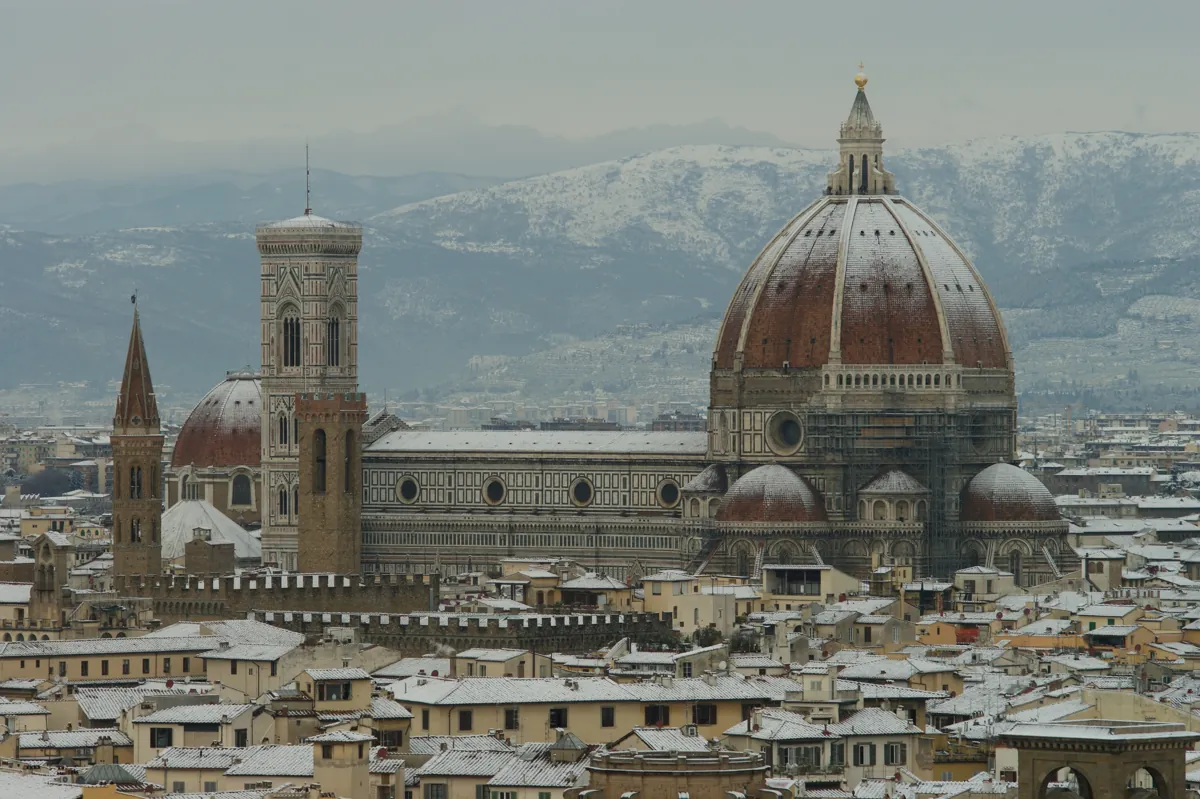
Sunrise over the terracotta rooftops and Brunelleschi's dome, seen from Piazzale Michelangelo
Florence, Italy: An Independent City Guide
Three tickets decide a trip to Florence, Italy: a Duomo pass with a Dome slot, an Uffizi entry and a timed David reservation. This guide prints the price of each, the rules that come with the slot and the closures that catch people out, so your hours go on the paintings instead of the queue.
Not sure how long to stay? The how-many-days planner counts one big museum per half-day.
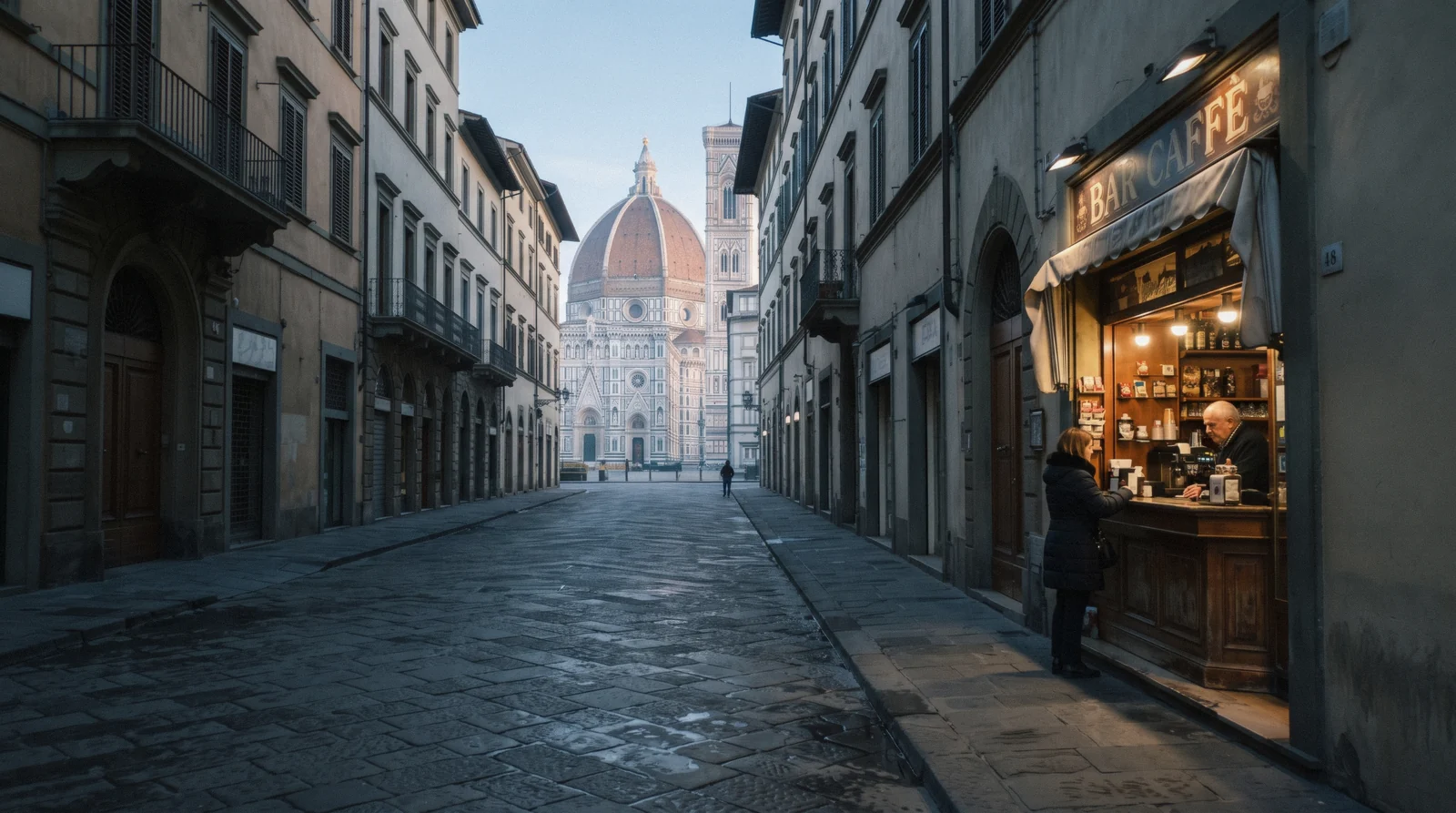
Arriving by air: Tram T2 runs from Amerigo Vespucci airport to the centre on a €2 urban ticket, so skip the taxi rank; the rules are on the tram, bus and the ZTL page.
Watching the budget? Nine of the city's big sights cost nothing — the free things to do in Florence routes them into a full day, vespers included.
Florence in six decisions: what to see, what to book, where to stay, what to eat
The five hubs of this Florence guide, each with the three facts that decide it.
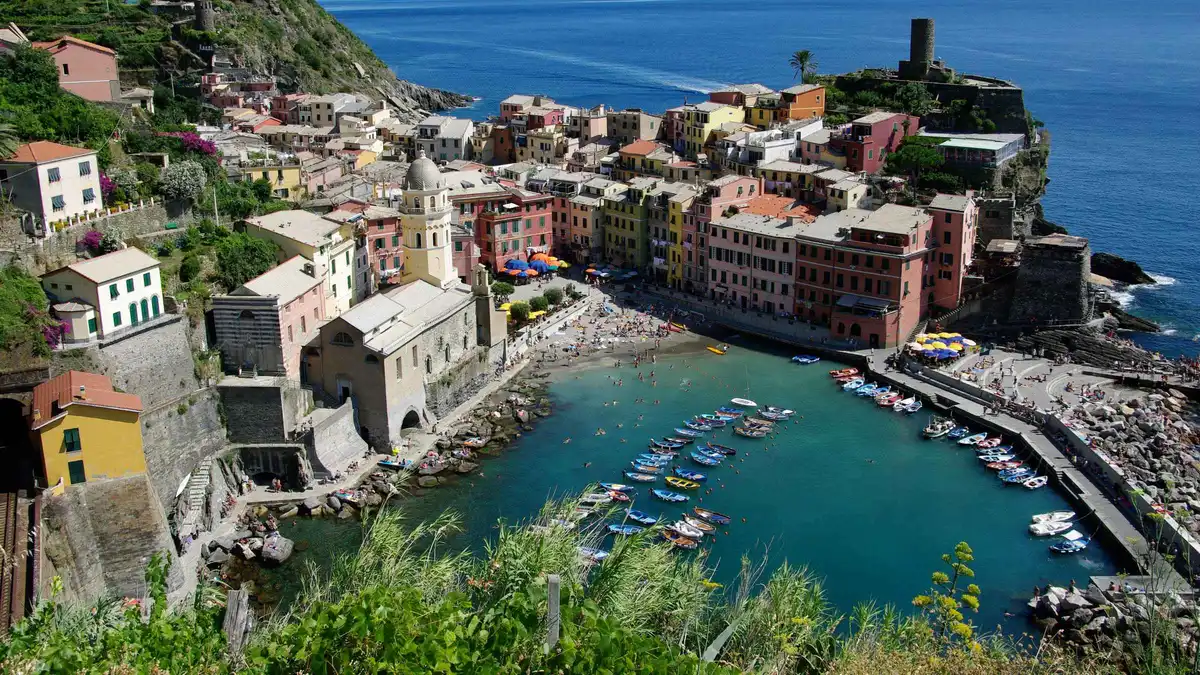
Cinque Terre is the one trip where the coach beats the train: about 6 hours of rail for 5 on the coast
Decides train or coach
Plan
Itineraries with timed slots already placed, the month chart in Celsius, and tram, bus and the ZTL. Read the three-day plan first; most people end up on it.
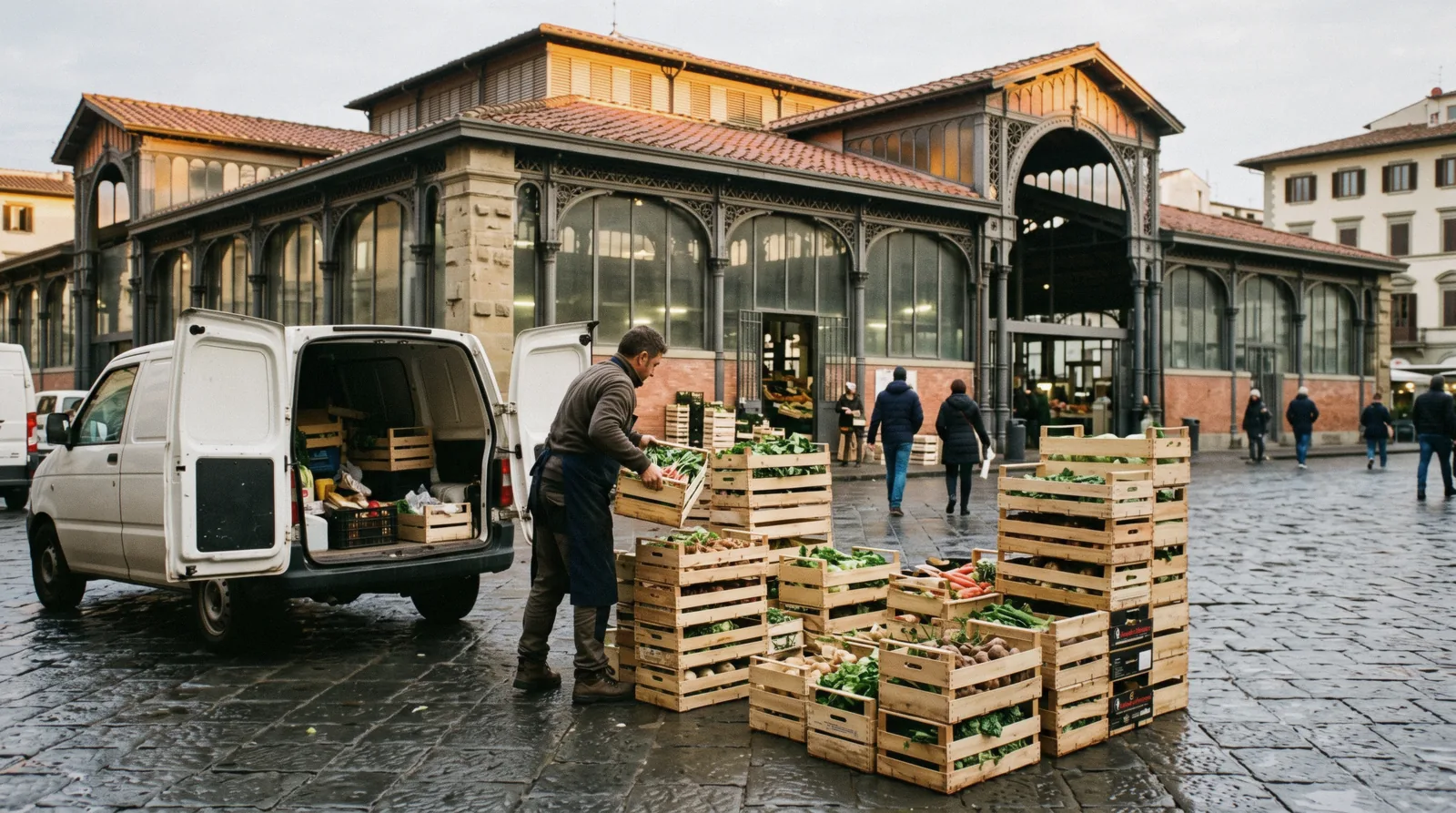
Kitchens shut between 15:00 and 19:30; Mercato Centrale upstairs runs 9:00 to 23:00 daily
Decides what you order, and what the bill adds
Where To Go In Florence: Five Quarters And The Hills Above Them
Florence inside the old walls is about two kilometres across, so the plan is not one district a day — it is one morning each, and the day trips fill what is left. These six cover the geography a first visit actually uses; nothing here is more than 25 minutes on foot from the Duomo except the last two.
Centro Storico
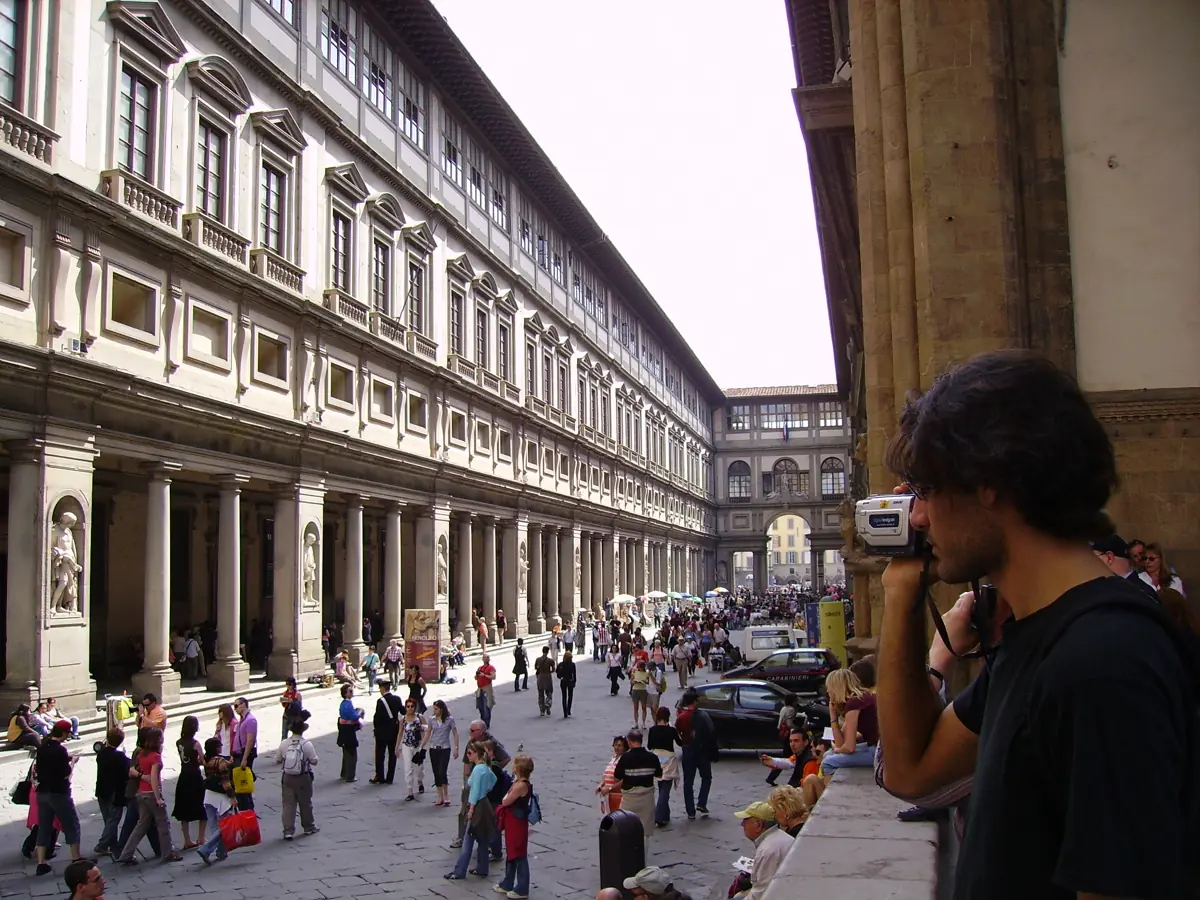
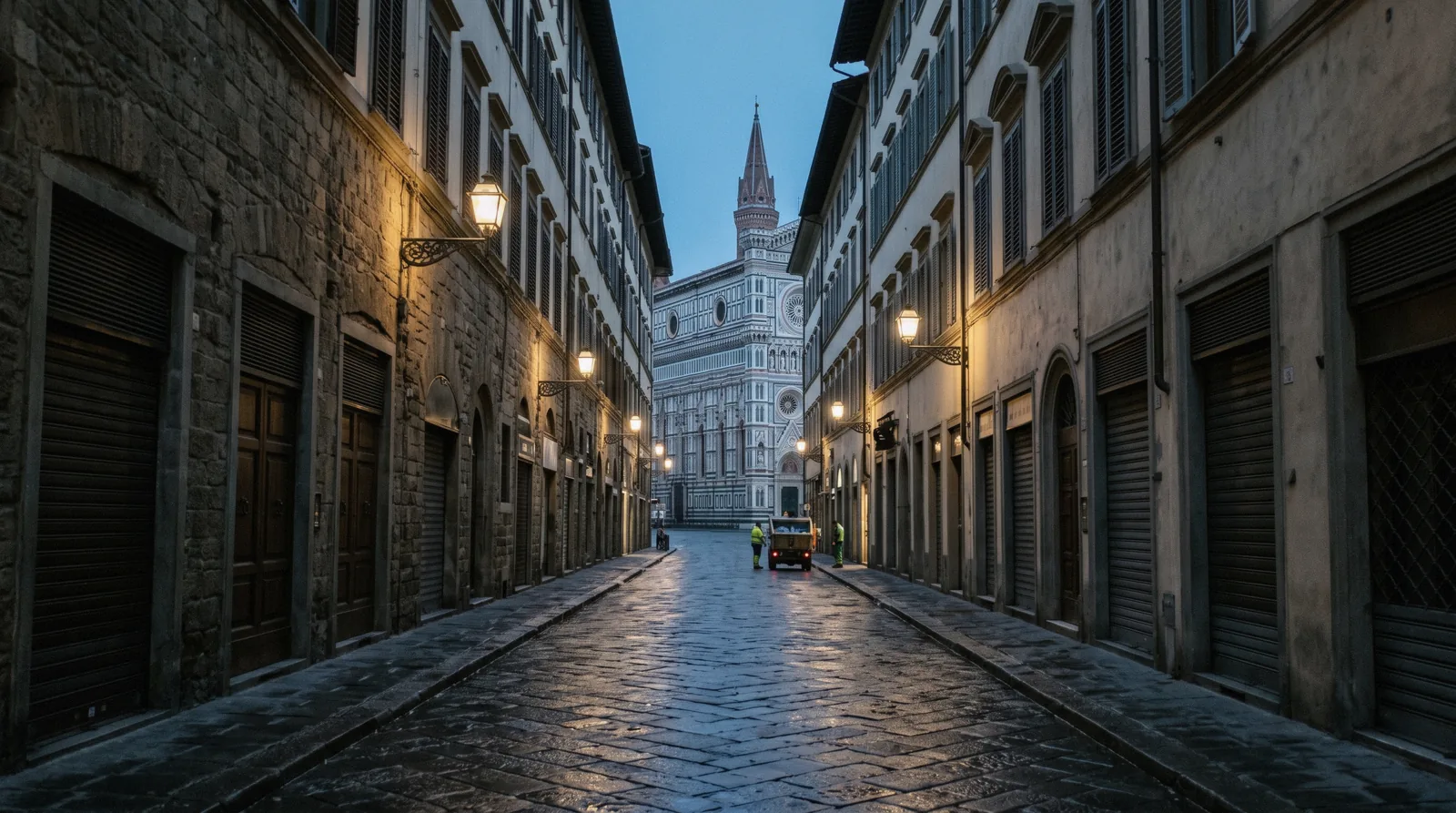
The UNESCO core: the Duomo, the Uffizi, Palazzo Vecchio and Ponte Vecchio inside a dozen blocks you can cross in fifteen minutes. Busiest between 10:00 and 16:00, and almost empty at 08:00.
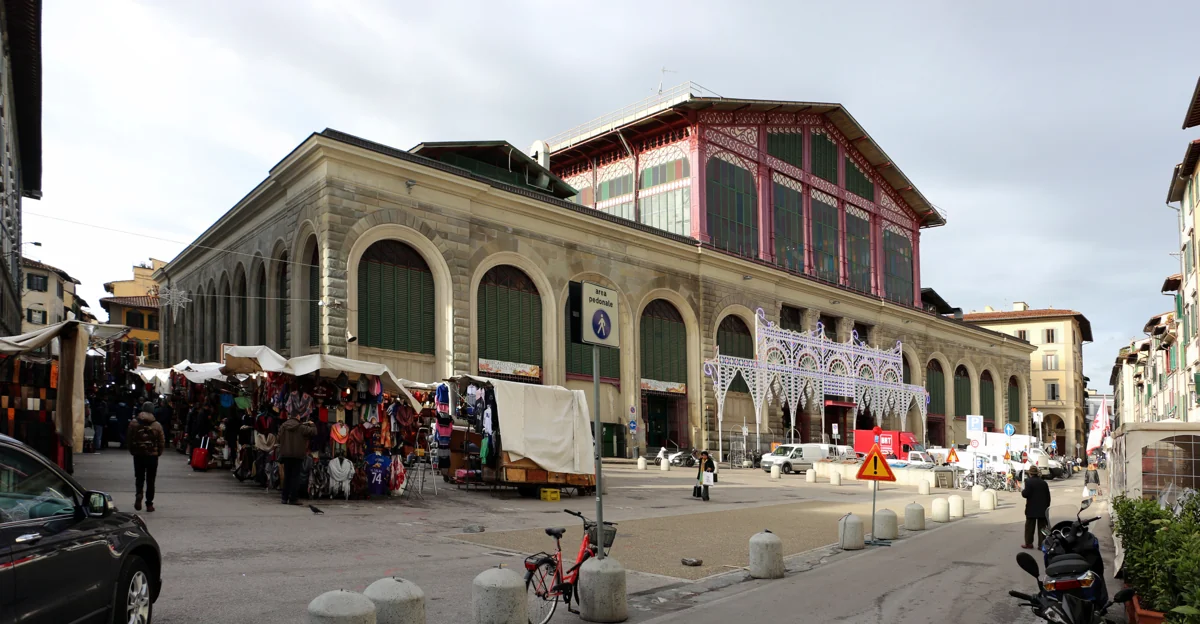
North of the cathedral: David in the Accademia, the Medici Chapels, the basilica of San Lorenzo and the market that feeds the whole quarter. Half a morning, and the one ticket worth holding in advance.
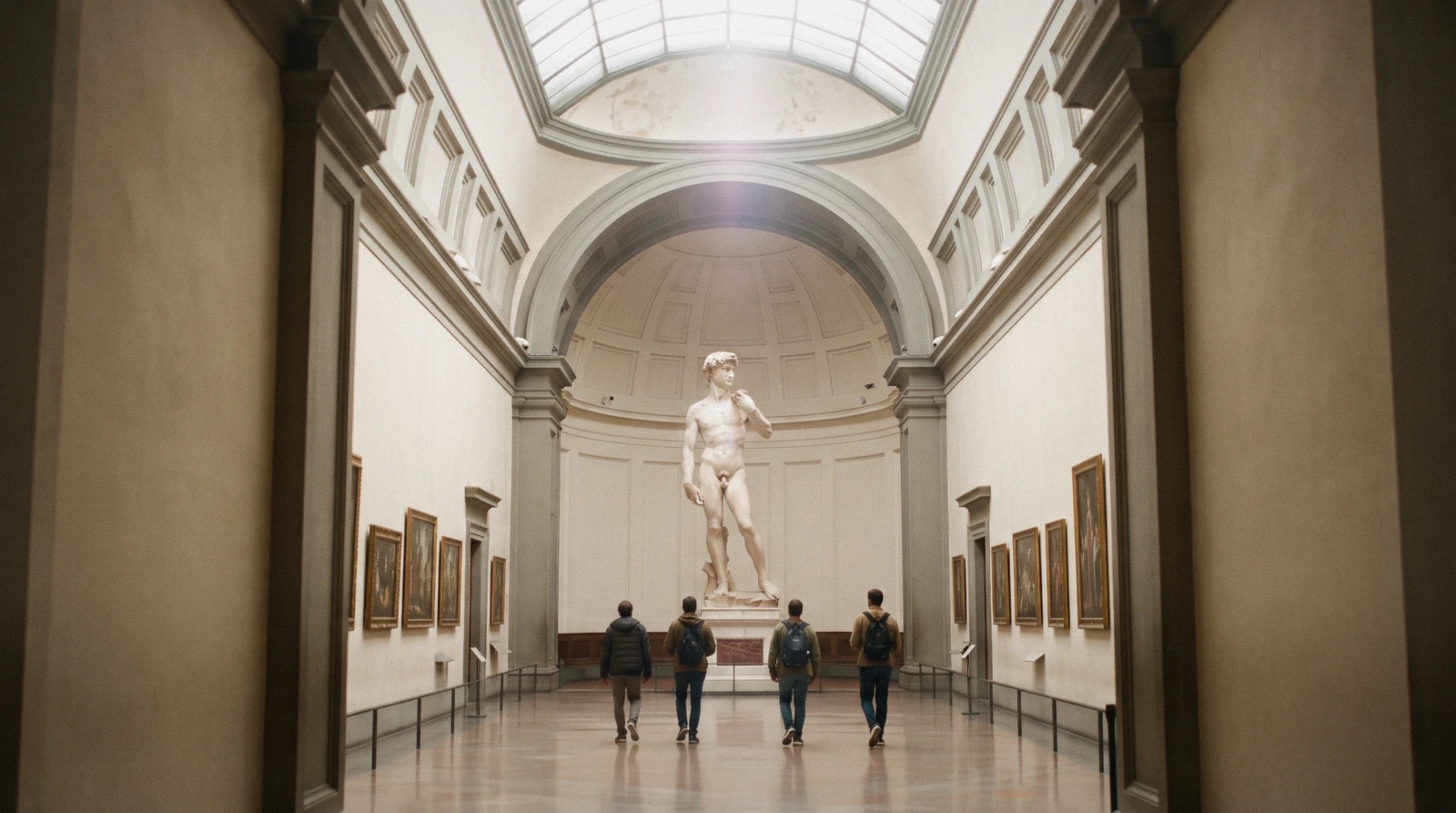
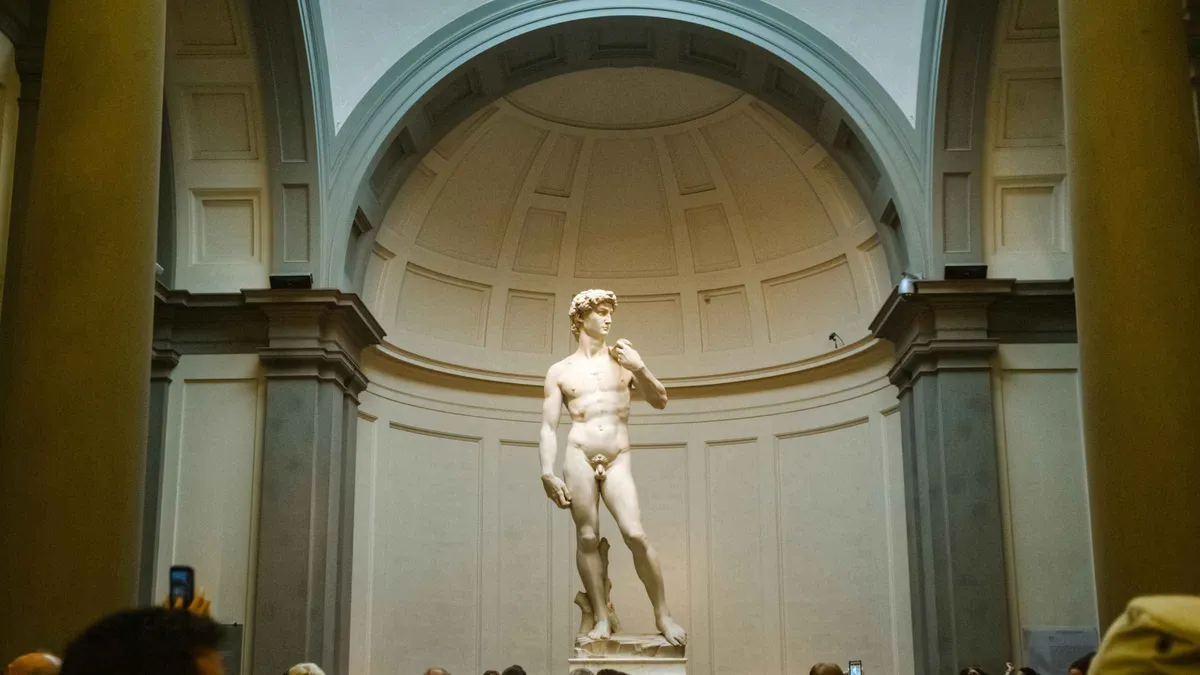
David's timed entry is $33 (€28) with an audio app, and the slot is fixed once booked
Mercato Centrale upstairs runs 09:00 to 23:00 daily, the ground floor to mid-afternoon
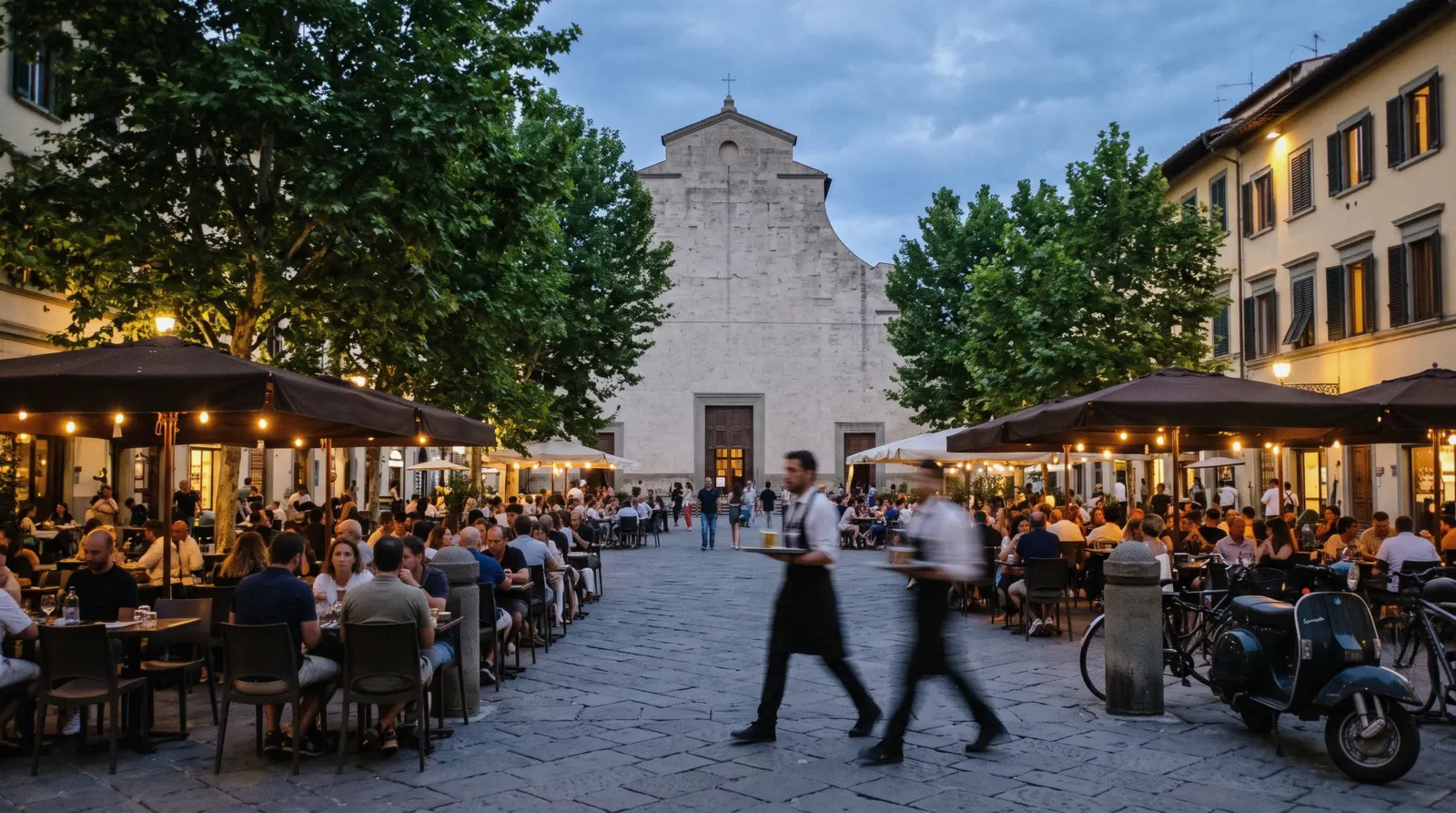
Across the river: Pitti, the Boboli garden, Santo Spirito and the artisan streets around San Frediano. This is where the evening happens, and where the restaurant bills stop being written for visitors.
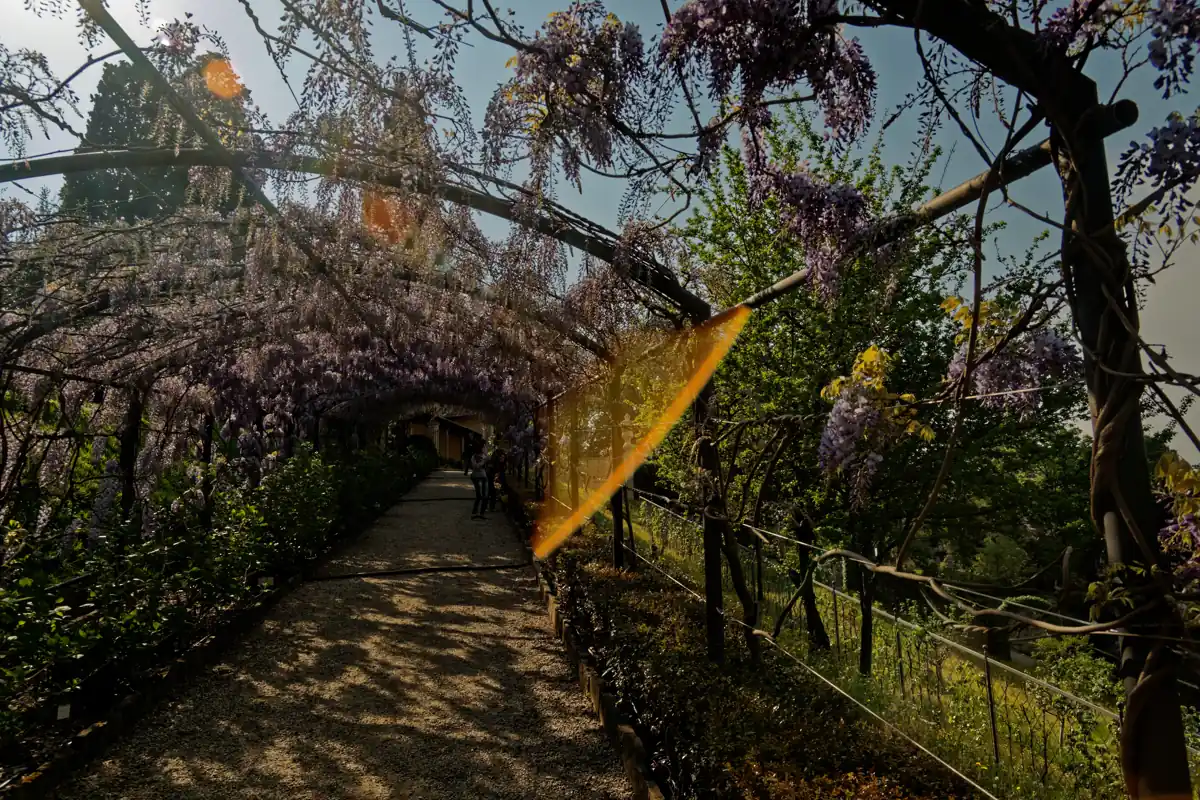
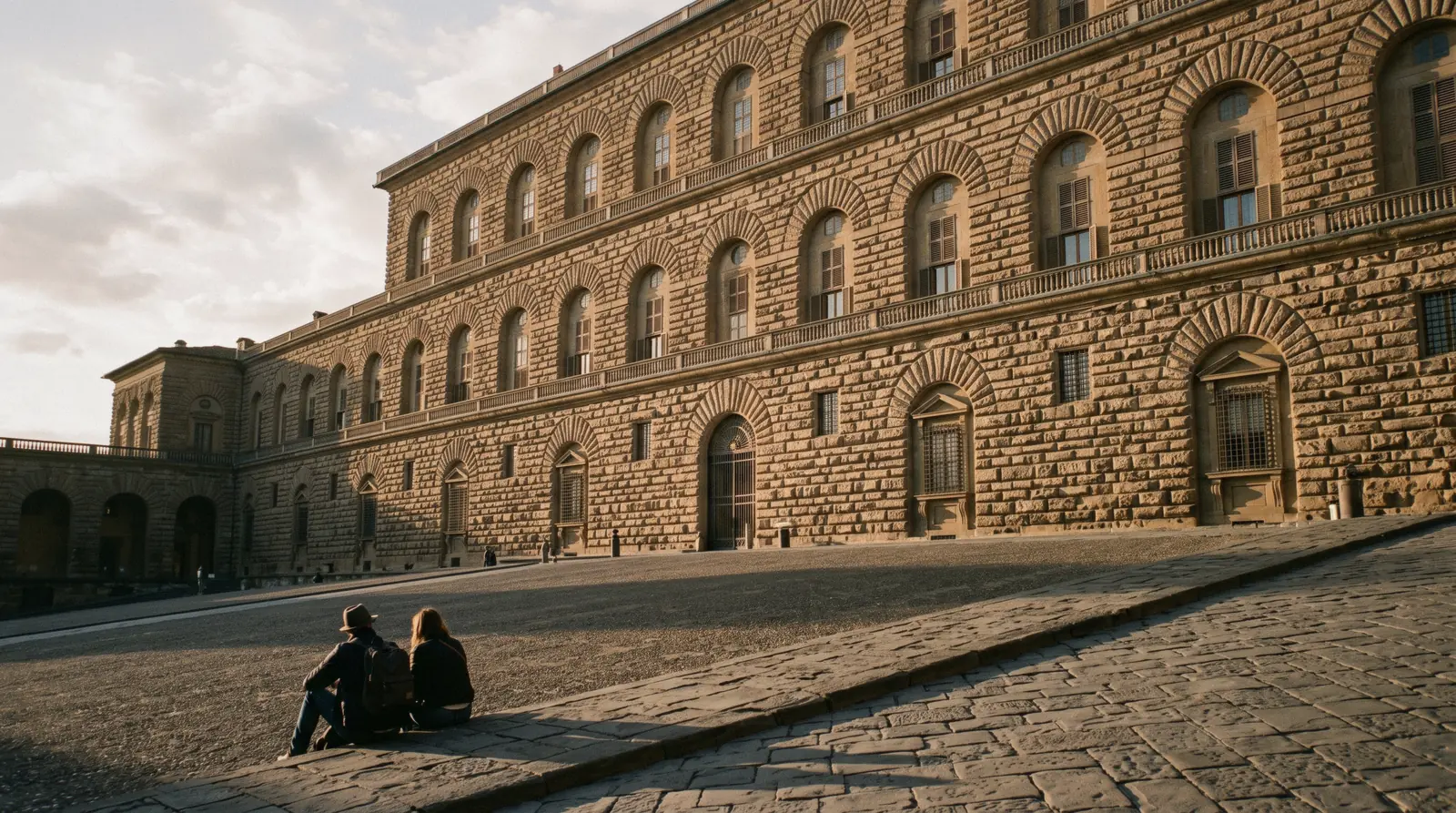
Pitti with Boboli is $41 (€35) on one ticket, with the Villa Bardini garden included
The Brancacci Chapel admits ten people for thirty minutes, $29 (€25) with an audio guide, so book it
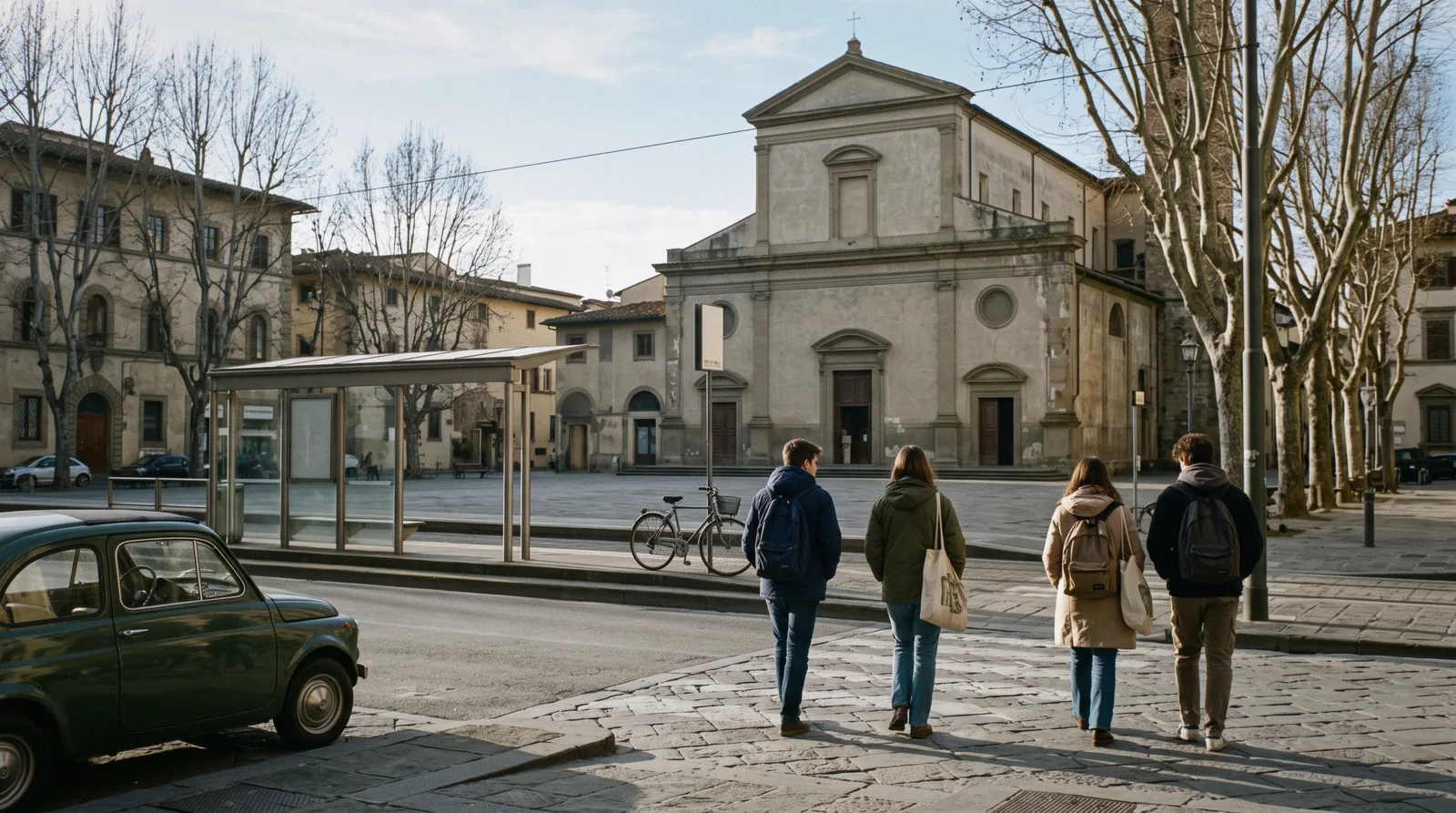
East of the centre: the basilica where Michelangelo and Galileo are buried, the Sant'Ambrogio market, and the leather trade that gave the quarter its name. Cheaper lunches than anywhere inside the ring.
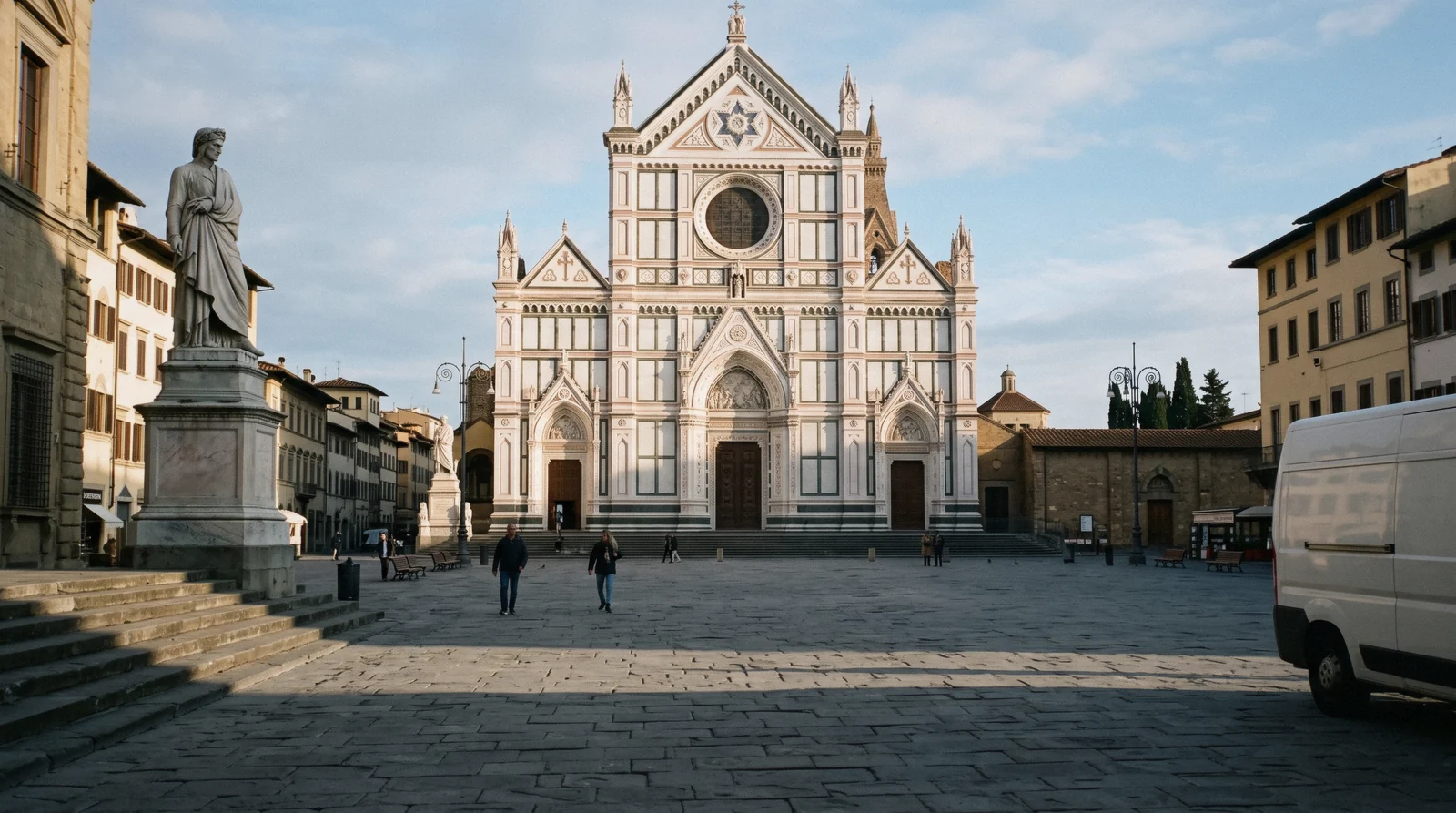
The basilica is $12 (€10), about 50 minutes, with shoulders and legs covered
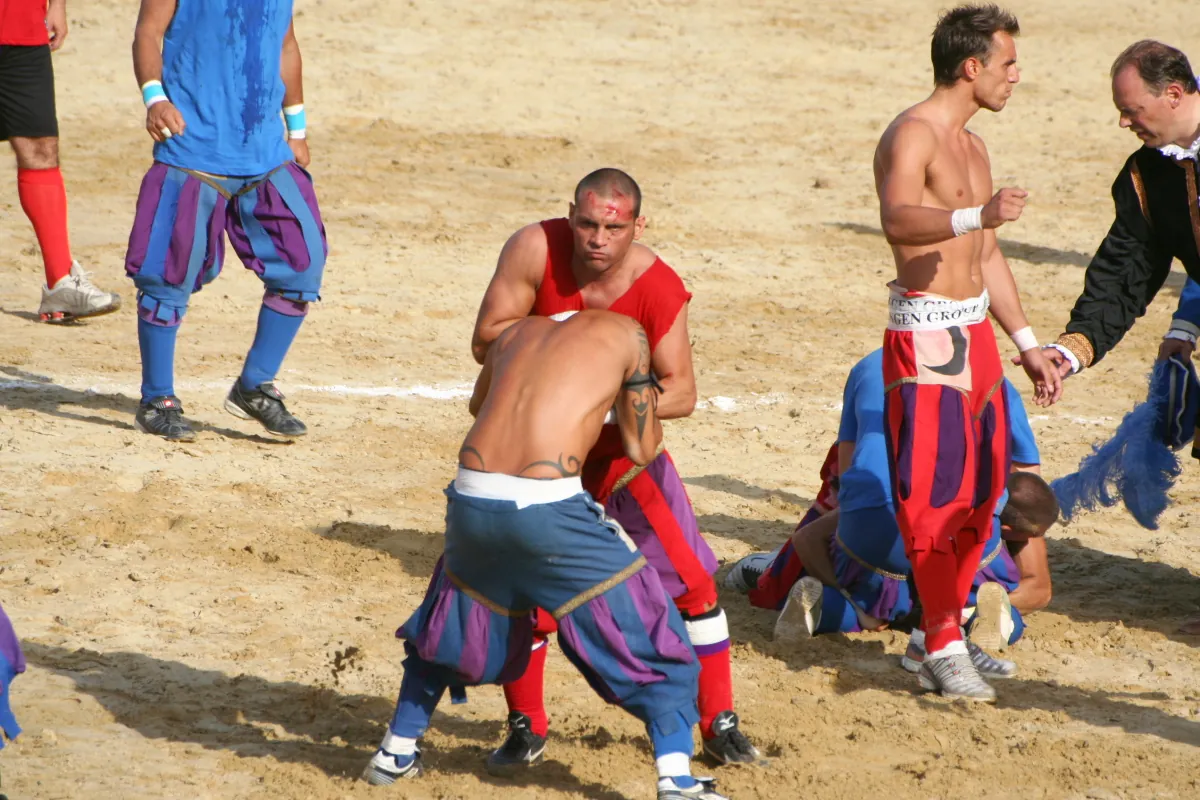
The square is the pitch for calcio storico each June — the events calendar has the dates
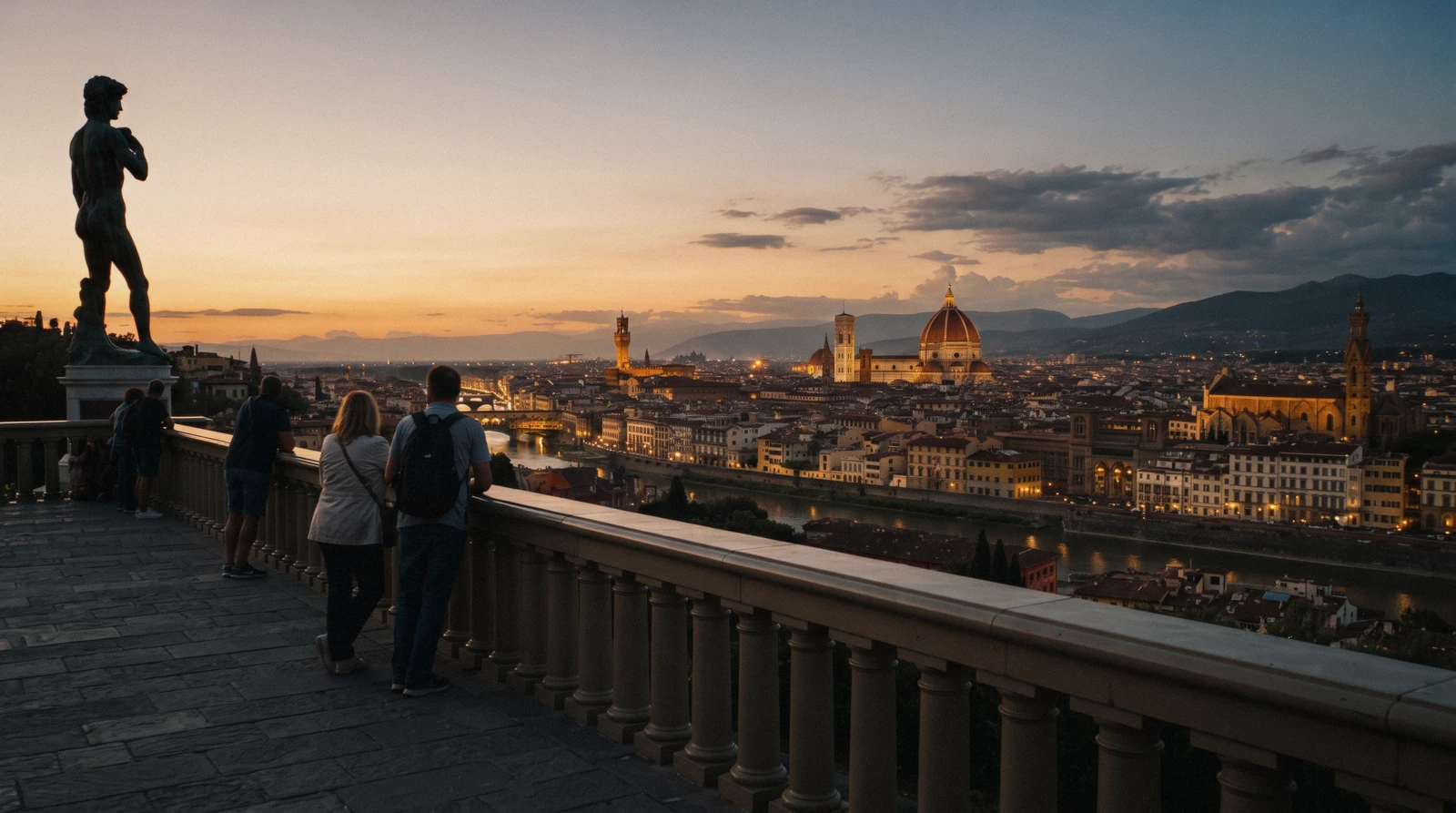
The terrace everyone photographs, and the eleventh-century abbey ten minutes above it that almost nobody climbs to. Both free, both open late, and the walk up takes about 25 minutes from Ponte Vecchio.
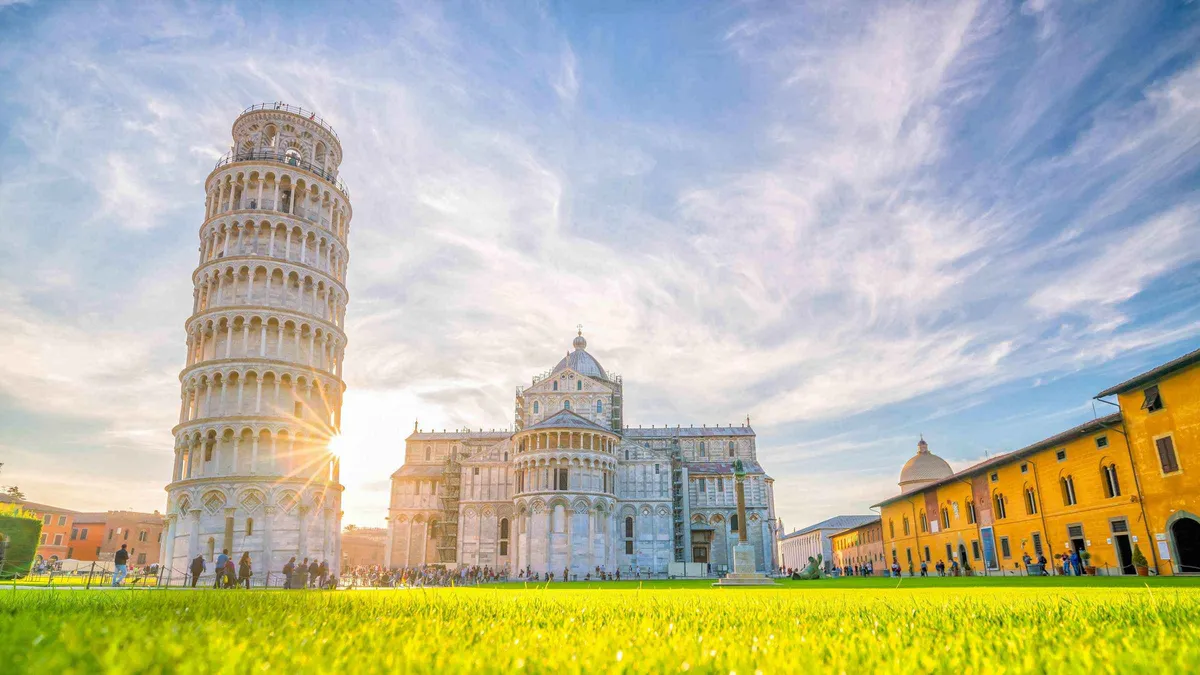
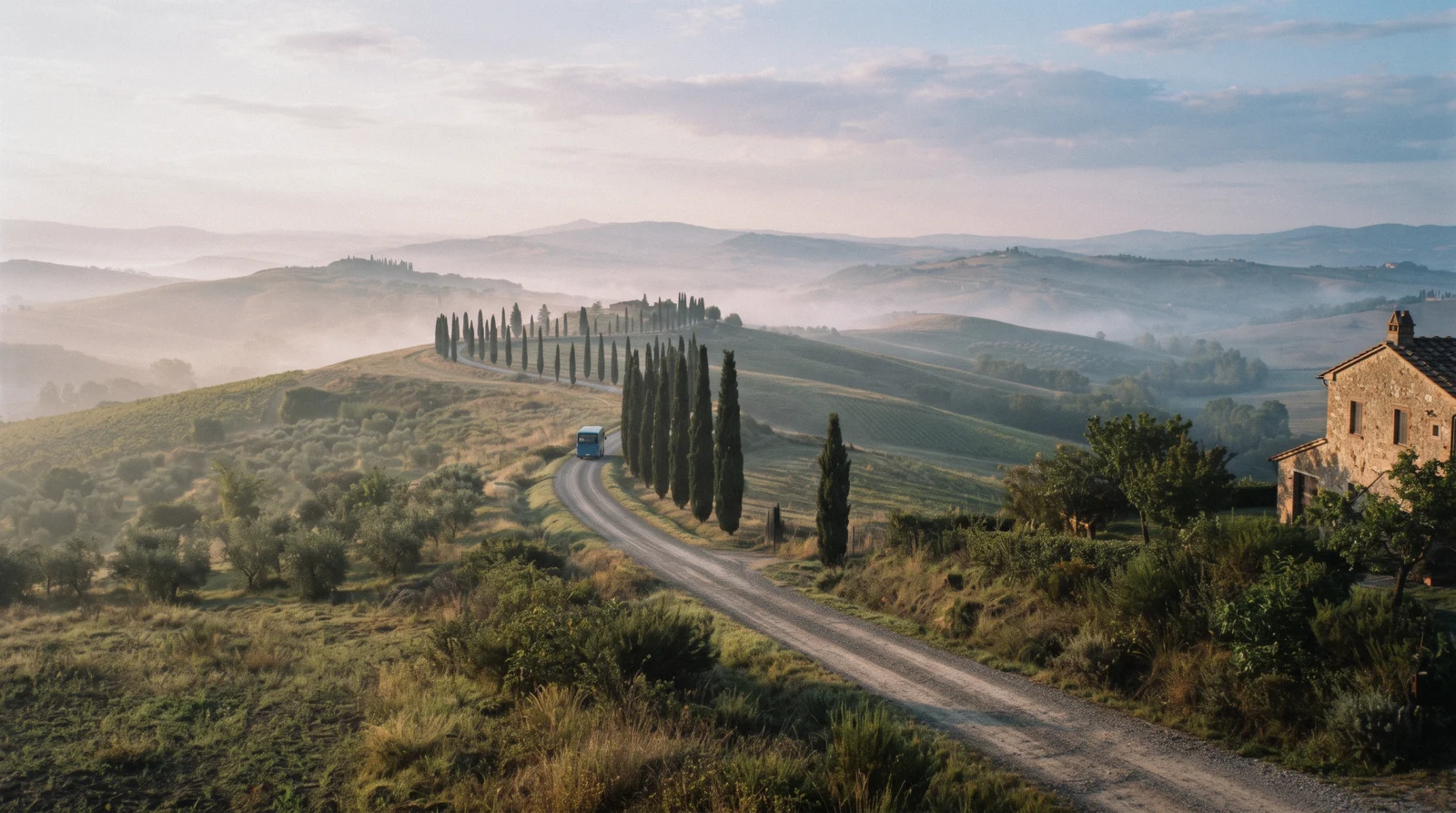
Pisa and Lucca are regional-train towns; Siena, San Gimignano, Chianti and the Val d'Orcia are coach or car country. One of them belongs in a three-day stay, two in a five-day one.
Florence must-see list, in the order first-timers actually walk it
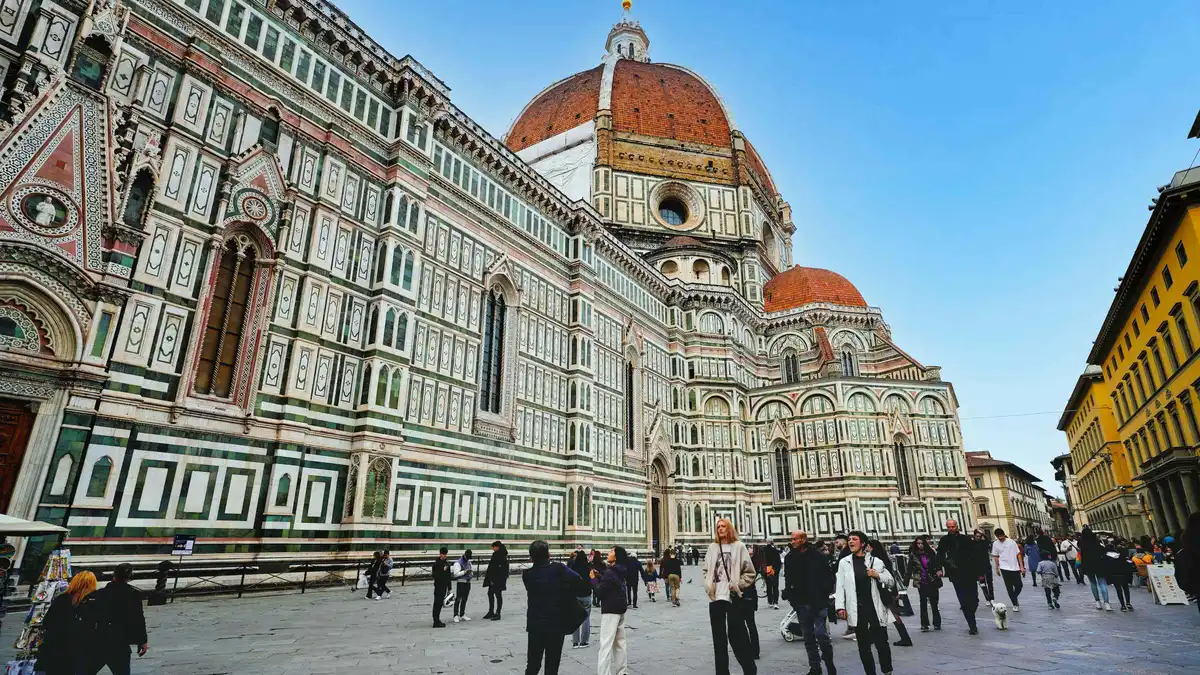
The historic centre is small enough that these eight sit on one loop from the Duomo to the river and back over the hill. Walk them in this order and the timed slots fall into place: Dome first while your legs are fresh, David after lunch, the view last.
1. The Duomo complex: Cathedral, Dome, Bell Tower, Baptistery, Museum
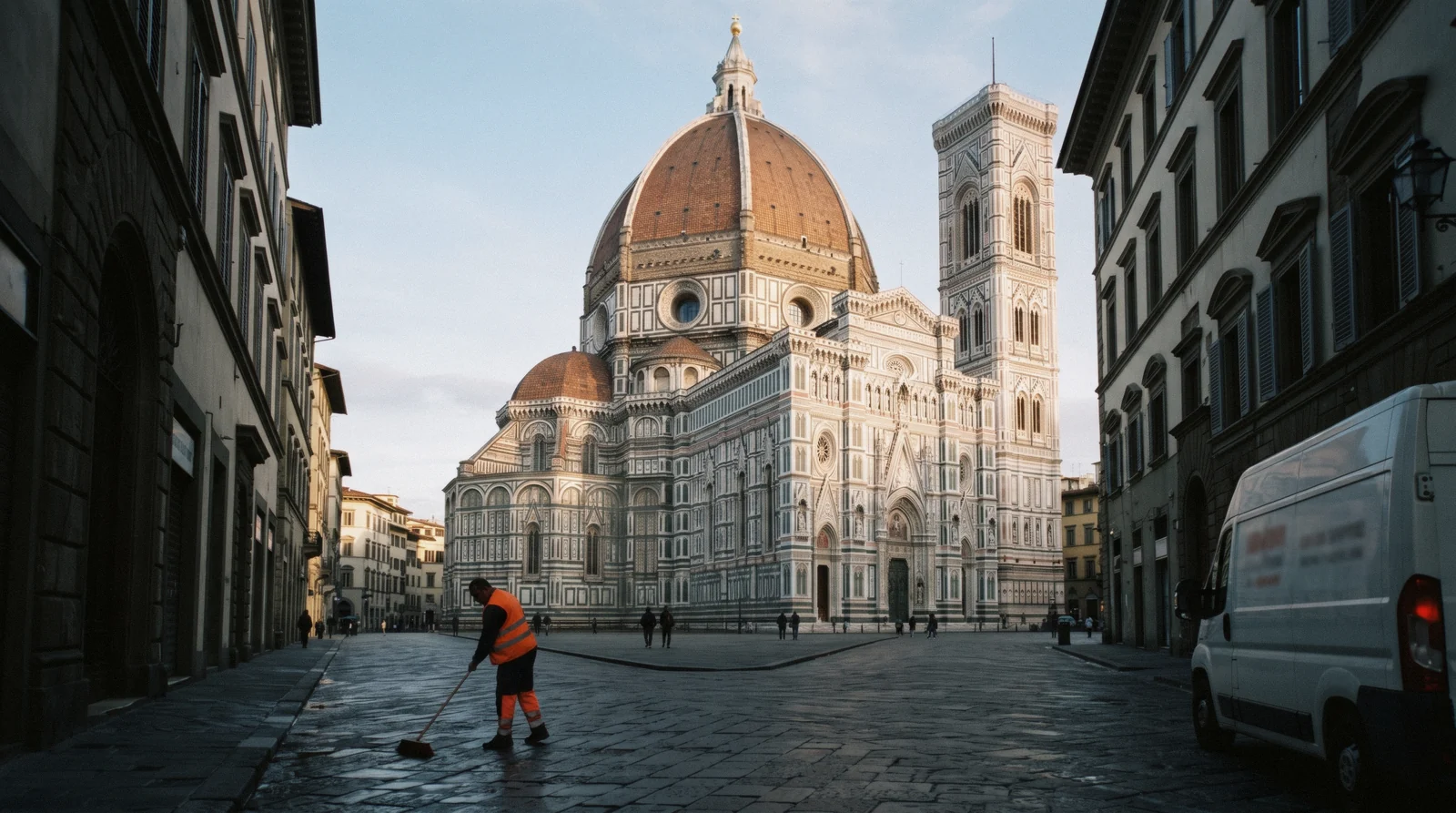
The Cathedral nave is free and needs no ticket, Monday to Saturday 10:15 to 15:45, closed to visitors on Sundays. Everything else in Piazza del Duomo runs on one of three passes from the Opera del Duomo, and only the Brunelleschi Pass includes the Dome. The dome climb ticket with the Duomo pass is €53 (about $62) with an audio app.
The Dome is 463 steps and the Bell Tower 414, with no lift for either; under-18s climb only with an adult. The dress code is enforced at the Cathedral and Baptistery doors: shoulders covered, knees covered, no flip-flops. Jeans are fine.
In 2026 the Dome closes for maintenance 16–20 November and the Bell Tower 9–13 November. Full hours for all five monuments are on the Duomo complex page; the pass comparison is on the tickets page.
2. Uffizi Gallery
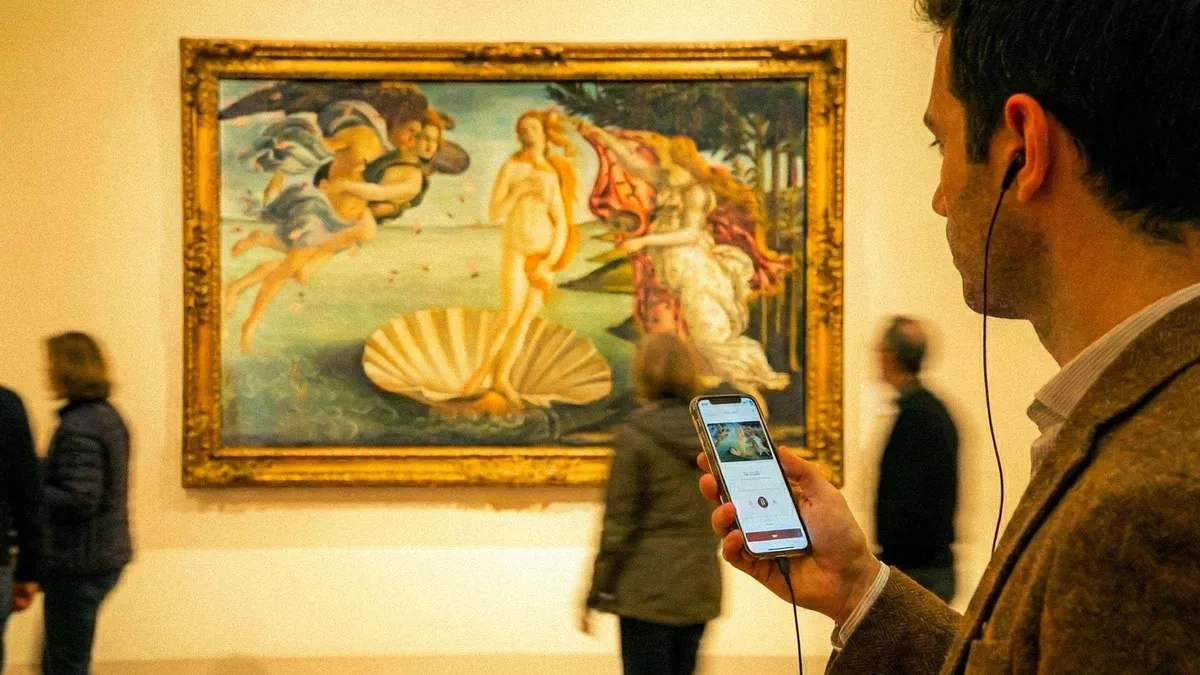
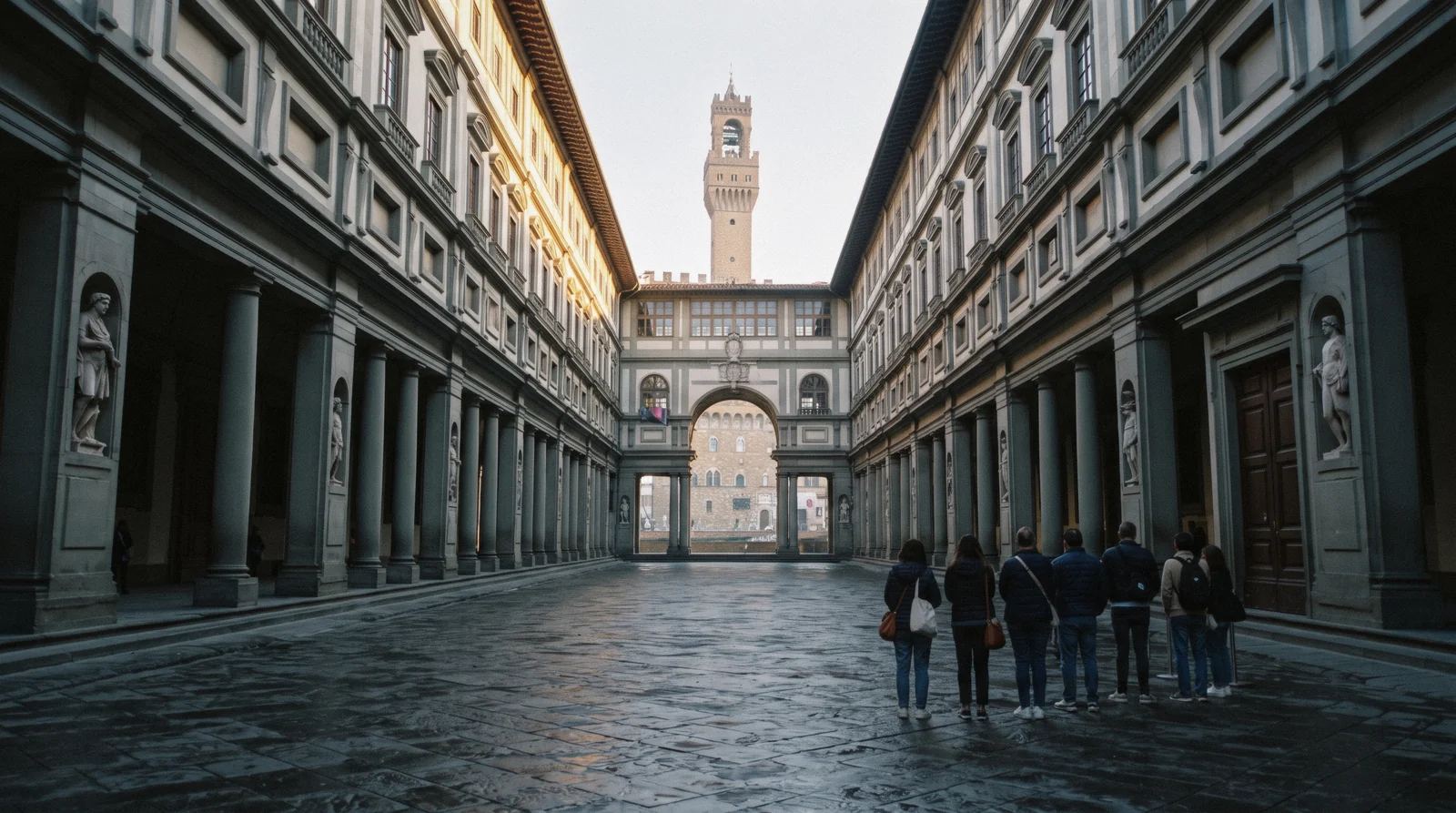
Botticelli, Leonardo, Michelangelo's Doni Tondo and Caravaggio in the corridors that Vasari built for the Medici offices. Open Tuesday to Sunday 8:15 to 18:30, ticket office closes 17:30, closed Monday, 1 January and 25 December. The reserved entry with audioguide is €16 (about $19), fixes your hour and leaves no limit on time inside.
Two hours covers the first-floor rooms without running. What to see and the room numbers are on the Uffizi page; every ticket option is on the Uffizi tickets page.
3. Accademia and the David
One statue justifies the visit, and the Prisoners in the corridor leading to it are the second reason. The timed entry to Michelangelo's David is €28 (about $33) with an audio app, open Tuesday to Sunday 8:15 to 18:50, last admission 18:10. There is no cloakroom, so leave the big bag at the hotel; water bottles above 0.5 litres are refused. The Accademia page covers the rooms; the Accademia tickets page covers every ticket option.
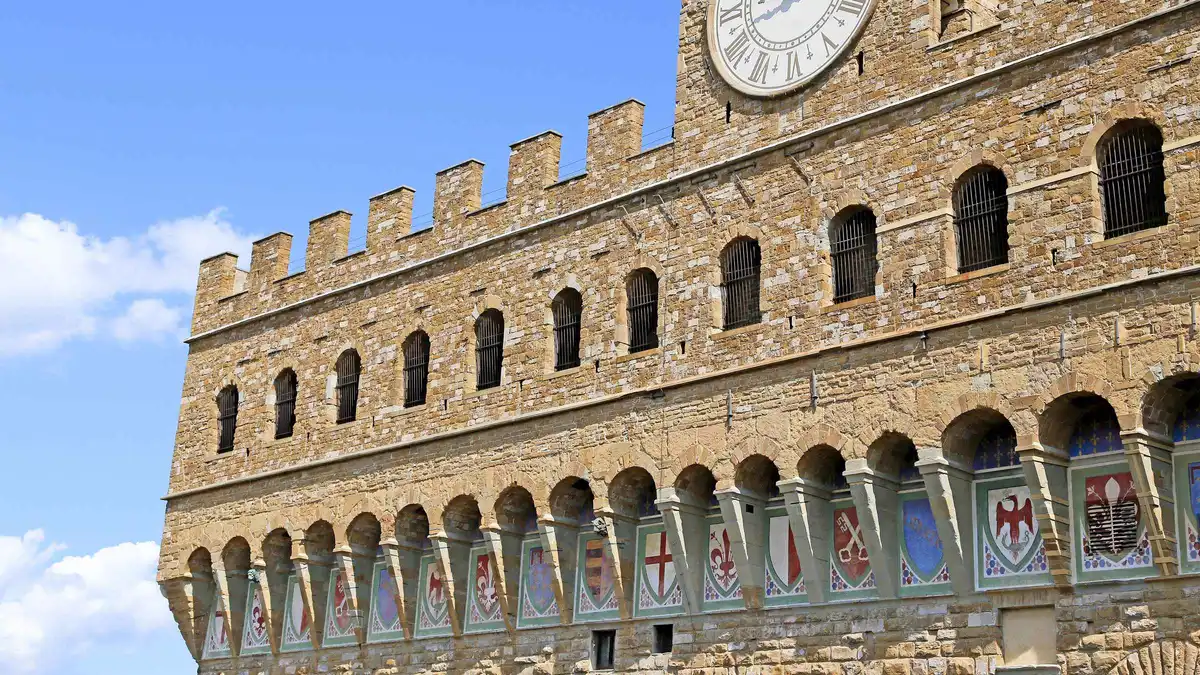
4. Palazzo Vecchio and Piazza della Signoria
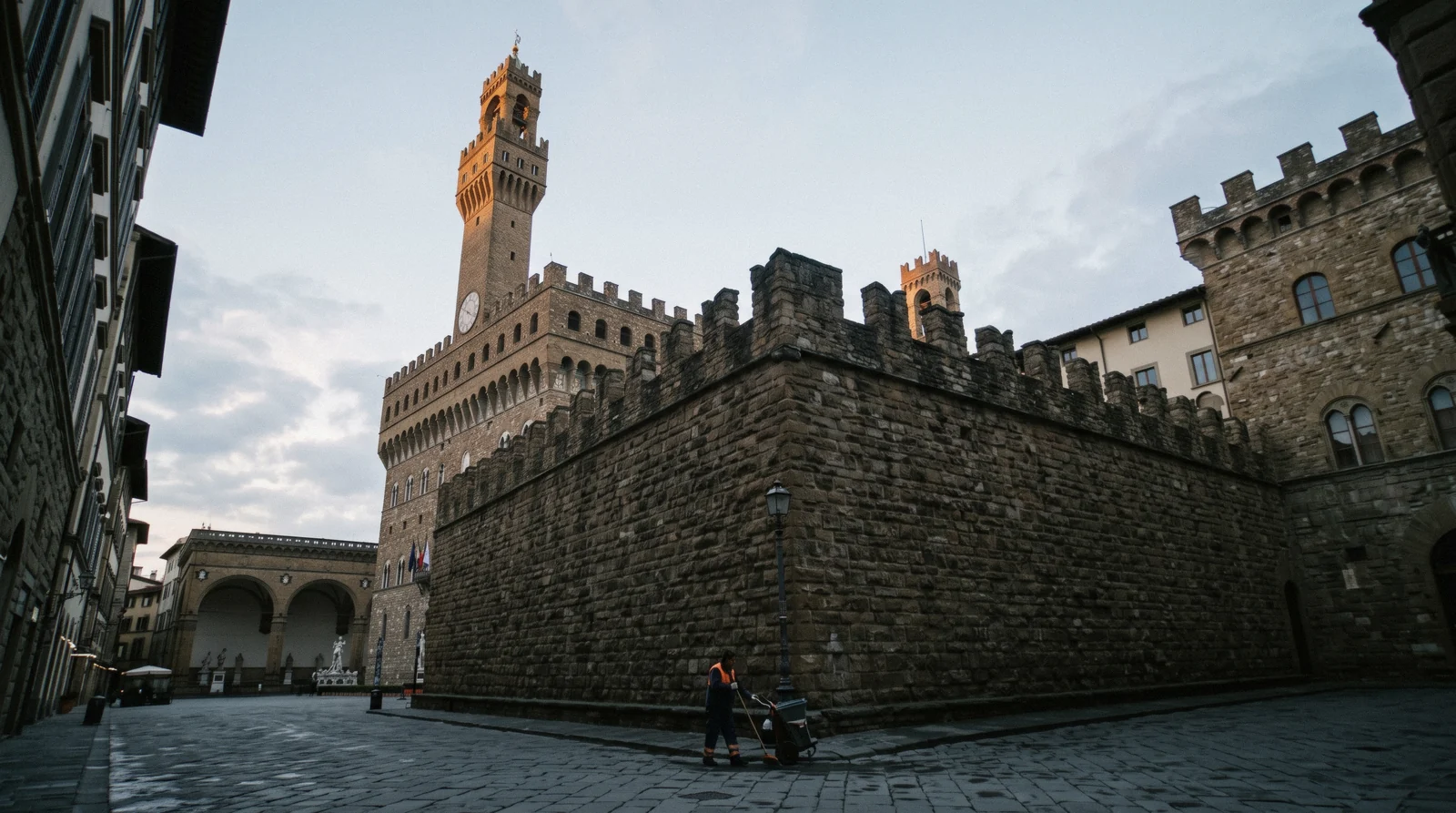
The piazza, the Loggia dei Lanzi and the copy of David outside the door are free and open all night. Inside, the entrance ticket with audioguide is €32 (about $37), with the Torre di Arnolfo as an add-on. The palace is a civic museum, so it opens on Monday, 9:00 to 19:00, with a short Thursday to 14:00.
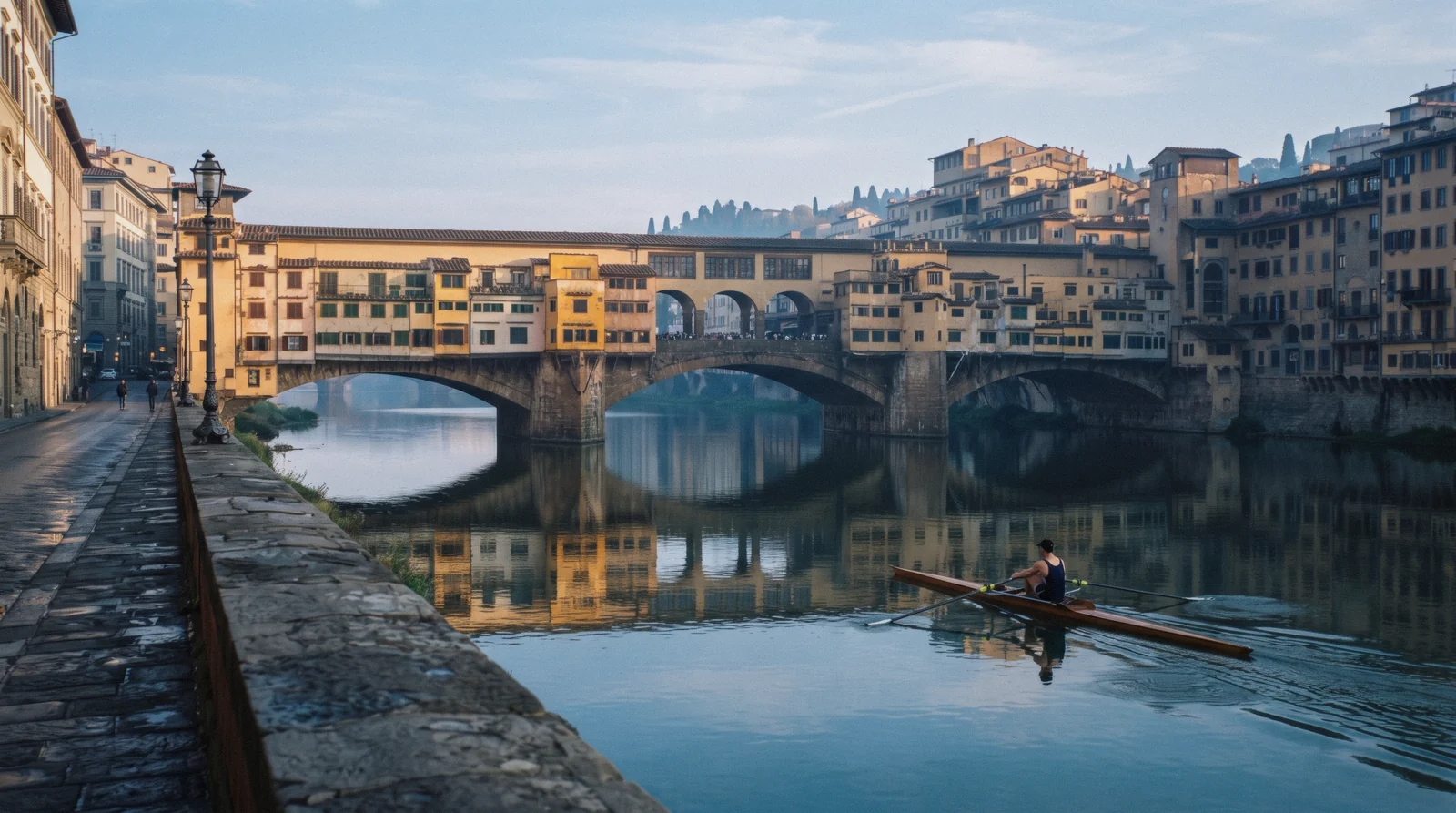
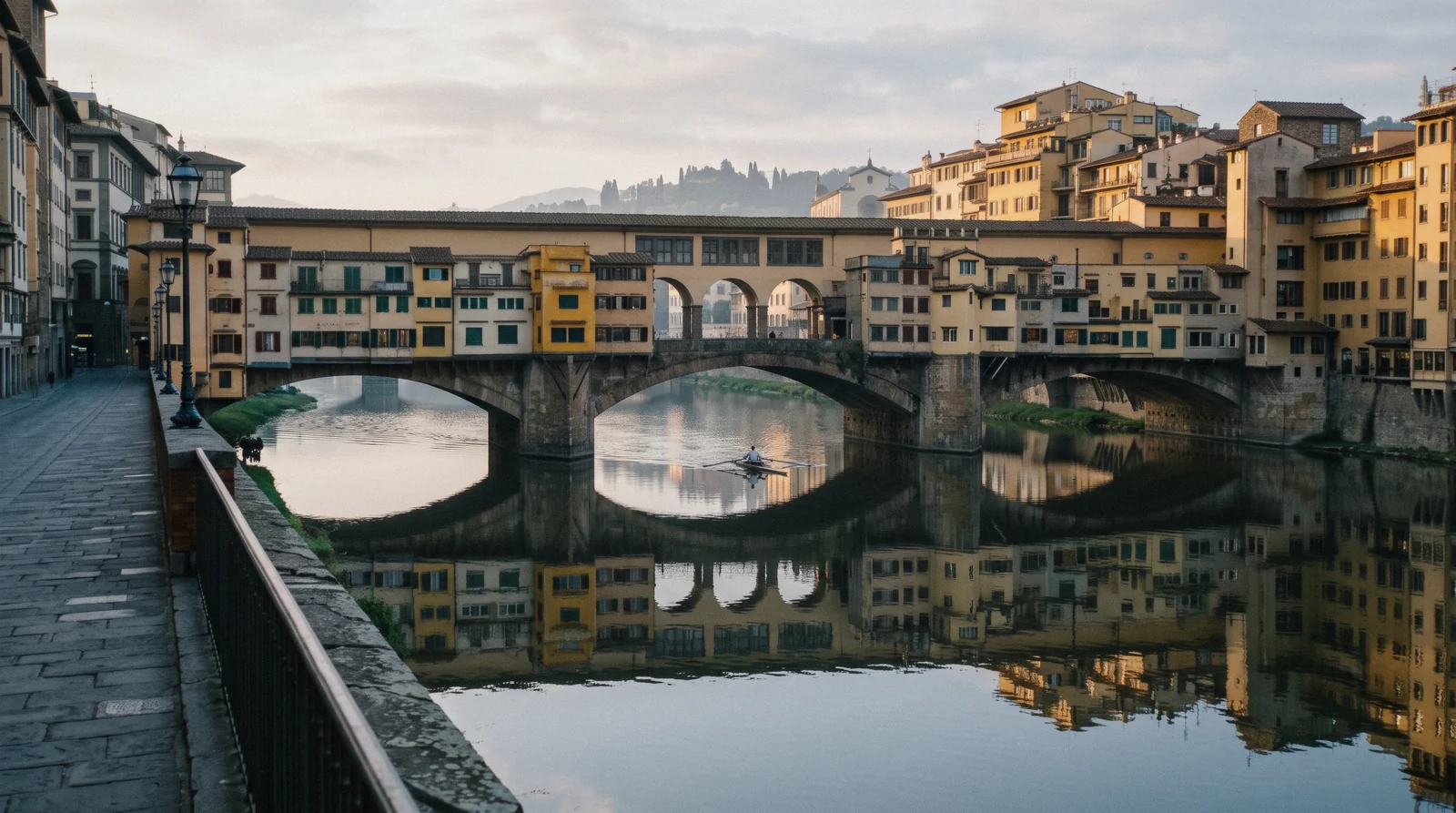
The bridge has stood since about 1345 at the Arno's narrowest point, and it was the only one in the city the retreating German army left standing on 4 August 1944. The goldsmiths are there by decree. The butchers who held the shops threw their waste straight into the river, and once the Medici used the route every day, a decree of 1565 threw them out and admitted only goldsmiths and jewellers.
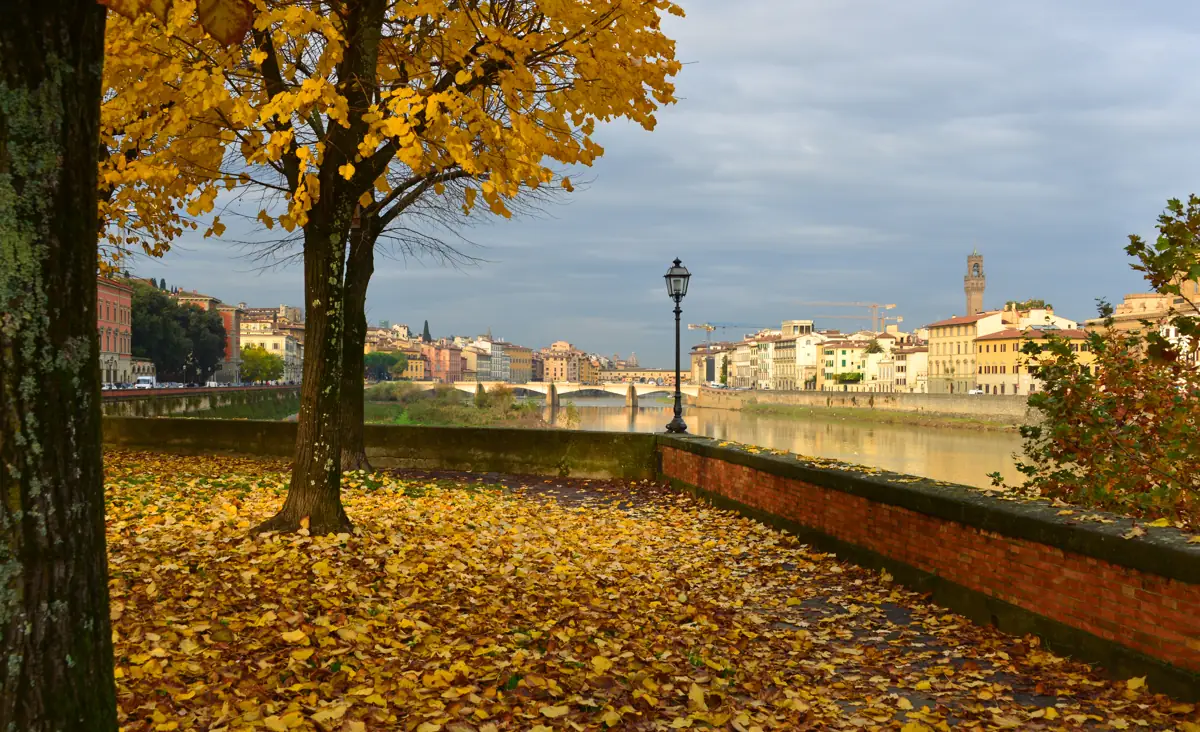
Cross it once in the day for the goldsmiths and once at night when the shutters are down and the bridge is almost empty. The best photograph of it is from Ponte Santa Trinita, one bridge downstream, not from the bridge itself. The Ponte Vecchio page has the history and the Vasari Corridor that runs over the shops.
6. Pitti Palace and Boboli Gardens
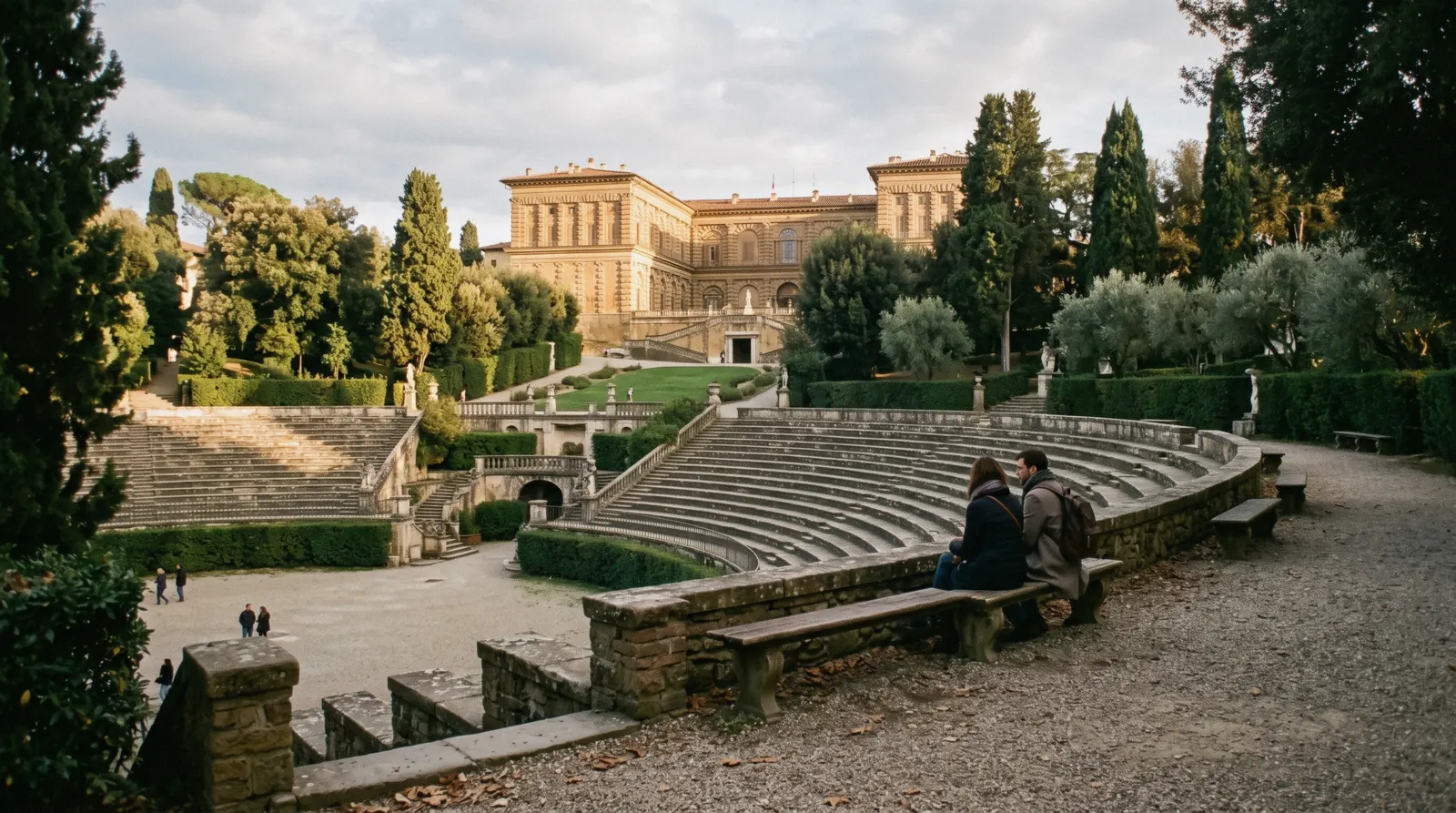
Over the river, the Medici's second palace holds the Palatine Gallery, and the garden behind it climbs to the Belvedere. The core was begun in 1458 for the banker Luca Pitti, who ran out of money and died with it unfinished. In 1549 Eleonora di Toledo, wife of Cosimo I, bought the house and had the hillside behind it laid out as a garden.
Boboli grew to 45,000 square metres of avenues, grottoes and statues, and became the model for the Italian formal garden that aristocratic gardens across Europe copied. The Pitti and Boboli ticket is €35 (about $41) and adds the Villa Bardini garden. Boboli closes on the first and last Monday of the month.
It is the largest Franciscan church in the world, built with a single wide nave under an open timber roof so a preacher's voice carried to a standing crowd, and its chapels were paid for by banking families such as the Bardi and the Peruzzi. Michelangelo, Galileo and Machiavelli are buried here, and Giotto's frescoes are in the chapels by the altar, though the Bardi Chapel is under restoration. The big seated Dante in the nave is an empty tomb.
He died in exile in Ravenna in 1321, and Ravenna kept him. Ticket €10 (about $12), plus €1 if you book online, and the Opera says the visit takes about 50 minutes. Monday to Saturday 9:30 to 17:30, Sunday 14:00 to 17:30. The Santa Croce page lists the free days for 2026.
8. Piazzale Michelangelo and San Miniato al Monte
Both are free. The piazzale is the view everyone photographs; feelflorence calls it the most visited view point in the city. San Miniato, the church five minutes further up, is open Monday to Saturday 9:30 to 13:00 and 15:30 to 19:00, and the monks sing vespers with Gregorian chant at 18:30 every day.
Bus 12 from Santa Maria Novella station saves the climb; the walk up the Rampe del Poggi from Piazza Poggi takes about fifteen minutes. Piazzale Michelangelo page.
Brunelleschi, Giotto or Ghiberti: which pass to pick
The three Opera del Duomo passes and what each one opens. Every pass needs a booked time-slot for its first monument, so pick the pass by the climb you want. The Dome row is the dome climb ticket with the Duomo pass, €53 (about $62) with an audio app.
Pass
What it opens
Timed slot for
Validity
Book
Brunelleschi Pass
Dome, Bell Tower, Baptistery, Museum, Santa Reparata
The Dome time-slot cannot be changed once booked, and names are checked against ID at the door. There are no single-monument tickets: every monument sits inside one of the three passes, which stay valid for 3 calendar days. Under-6s are free on every pass.
Tickets people book first
One card for each of the four tickets a first visit books first: David, the Dome, the Uffizi and Palazzo Vecchio. Prices and ratings are the booking platform's own figures, and every card shows what the ticket includes and how it cancels.
from €28Best seller
Florence: Timed Entry to Michelangelo's David + Audio App
listed at $33.30
★★★★★★★★★★4.6(21,262 reviews)· Valid 1 day
Reserved timed entry to the Accademia for Michelangelo's David with a digital audio app. Slot is binding; collect the ticket 15 minutes before.
Prices, ratings and details are the platform's own. Dollar figures are the listed prices. The platform bills in your account's currency.
How many days Florence needs
One big museum per half-day is the counting rule behind this table — the Uffizi and the Accademia each take two hours plus the walk and the queue. Rome versus Florence is not a ranking: as planners, Florence takes three nights and Rome four.
Days
What fits
Book ahead
Skip
Itinerary
1 day
Dome slot at opening, Uffizi late morning, David after lunch, Piazzale Michelangelo at sunset
Dome slot, David, Uffizi
Pitti, Santa Croce, any day trip
Florence in one day
2 days
Day one as above; day two Pitti and Boboli, Santa Croce, an Oltrarno evening
Same three, plus Pitti if it is a weekend
Day trips
Florence in two days
3 days
Two museum days at an easy pace plus Bargello or the Medici Chapels, San Miniato vespers, a cooking class
The three timed tickets
Nothing on the must-see list
Florence in three days
4+ days
The three-day plan plus a train to Pisa or Siena, or a coach to Cinque Terre
Florence Itineraries: One, Two Or Three Days With The Slots Already Placed
Three plans built on the official opening hours, with every timed slot placed in the hour it works best and the walking minutes between stops.
Florence in One Day
One museum, one climb, one view. The Uffizi takes the 08:15 slot, the Dome comes after lunch when the weekday slots run to 18:45, and the day ends on the Piazzale with vespers at San Miniato. About €69 (about $81) in tickets and six kilometres on foot: the one-day plan.
08:15 Uffizi, then the free Cathedral nave before it shuts at 15:45
Dome slot after lunch; Ponte Vecchio and the Rampe del Poggi on the way up
Monday version swaps the Uffizi for Palazzo Vecchio and Santa Croce
All three timed slots on one day, the walk-up museums on the other. Day one is the Uffizi, Palazzo Vecchio, Bargello and Santa Croce with the sunset from the Piazzale; day two is the Dome at 08:15, David at 11:30 and Pitti with Boboli, which closes latest. Total about €193 (about $226): the two-day plan.
Day 1: Uffizi 08:15 → Palazzo Vecchio → Bargello → Santa Croce → San Miniato vespers
Day 2: Dome 08:15 → Baptistery → Accademia 11:30 → Mercato Centrale → Pitti and Boboli
Weekend notes: Sunday nave closed, Dome from 12:45, first Sunday means unreserved queues
The plan most readers use: the Accademia and the Dome on day one, the Uffizi and the Oltrarno on day two, and a third day that is either the quieter museums (Santa Croce, Bargello, Galileo, Brancacci) or a coach day to Tuscany or the Cinque Terre. Costs, walks and the book-first order are on the three-day plan.
Day 1 ≈ €108 in tickets, day 2 ≈ €83, with the Palazzo Vecchio tower as an add-on
Book in this order: Dome slot, Accademia, Uffizi, Brancacci
Day 3B: Pisa–Siena–San Gimignano coach from €49 or Cinque Terre from €54
Photo: sailko, CC BY 2.5, via Wikimedia Commons (creativecommons.org/licenses/by/2.5)Photo: Lucarelli, CC BY-SA 3.0, via Wikimedia Commons (creativecommons.org/licenses/by-sa/3.0)
Eating in Florence: steak by weight, offal standing up
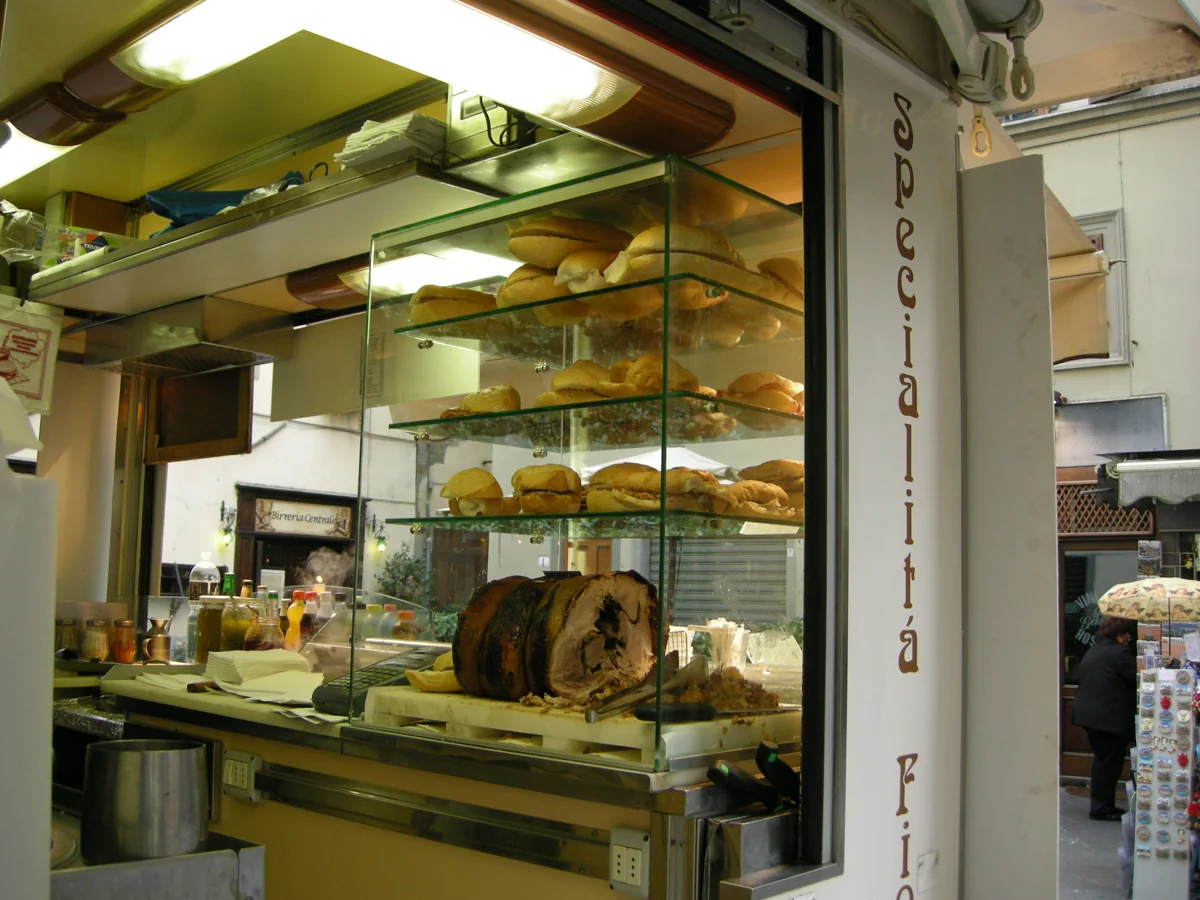
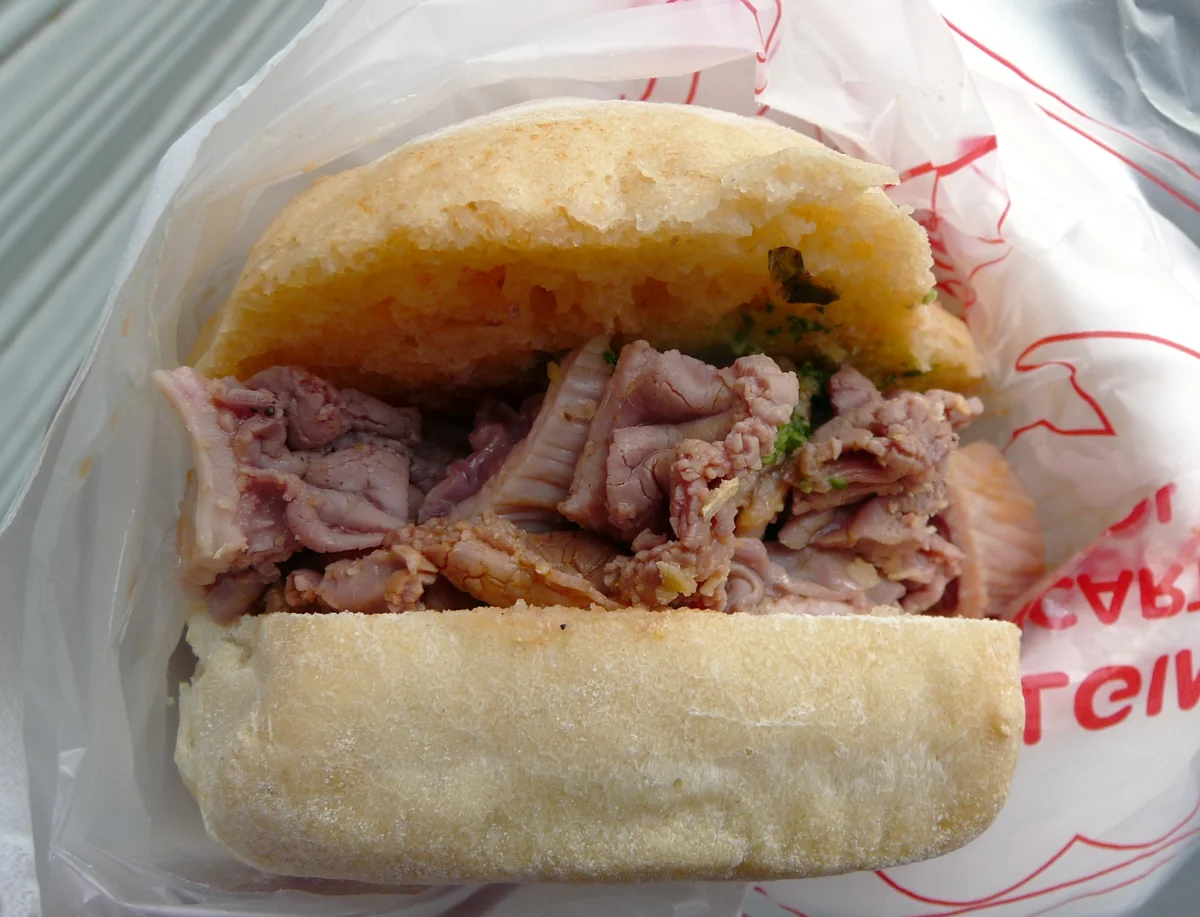
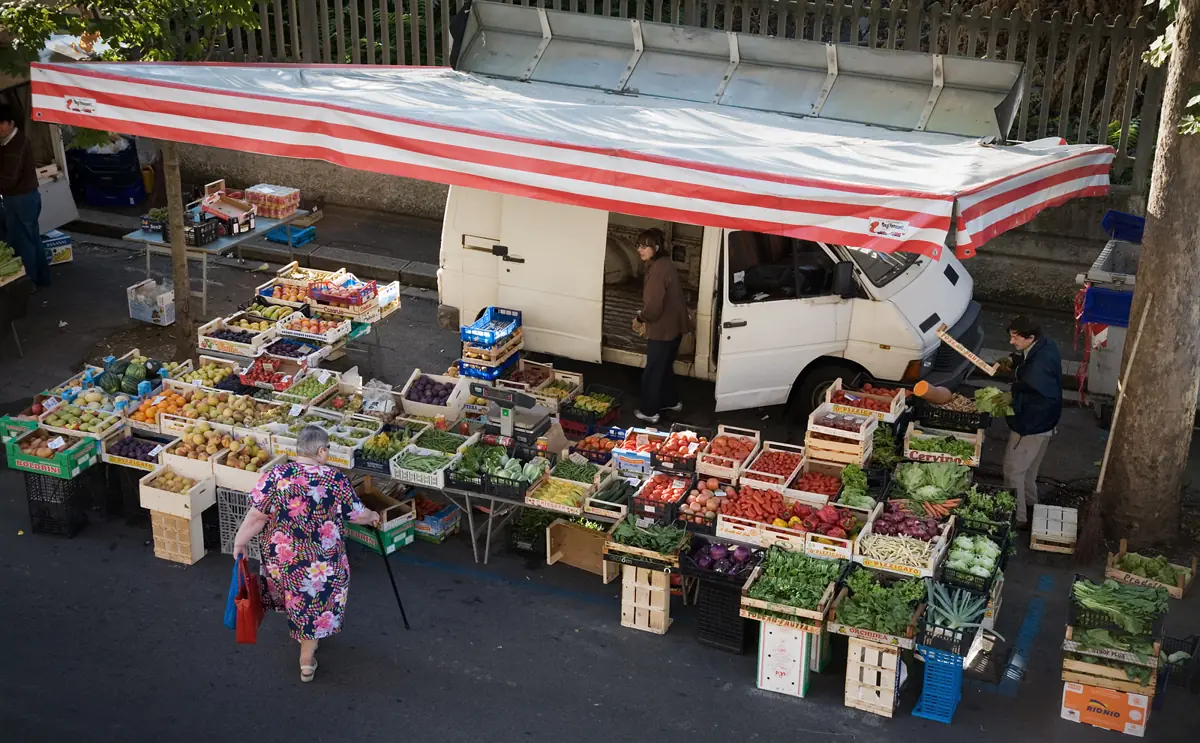
The Florentine steak is a thick T-bone from Chianina cattle, grilled rare and priced by weight, so the figure on the menu is per hundred grams and one cut normally feeds two or more people. Ask what the piece weighs before it goes on the grill, not after it reaches the table. The city's own fast food is offal: lampredotto, the fourth stomach of a cow simmered for hours in broth and stuffed into a roll whose crown has been dipped in the cooking liquid, and trippa alla fiorentina, both sold at market counters and from street carts.
Schiacciata, the salted flatbread split and filled to order, is also sold by weight, at bakeries. Two habits worth learning before you sit down: the coperto, the per-person cover charge, belongs printed on the menu, and a wine bar legitimately charges less at the counter than at a table. Some palazzo walls have reopened their buchette del vino, the arched wine windows cut for selling by the flask.
Photo: Celuici, CC0, via Wikimedia Commons (creativecommons.org/publicdomain/zero/1.0)Photo: Lorenzo Noccioli, CC BY-SA 3.0, via Wikimedia Commons (creativecommons.org/licenses/by-sa/3.0)
The dates that change the trip
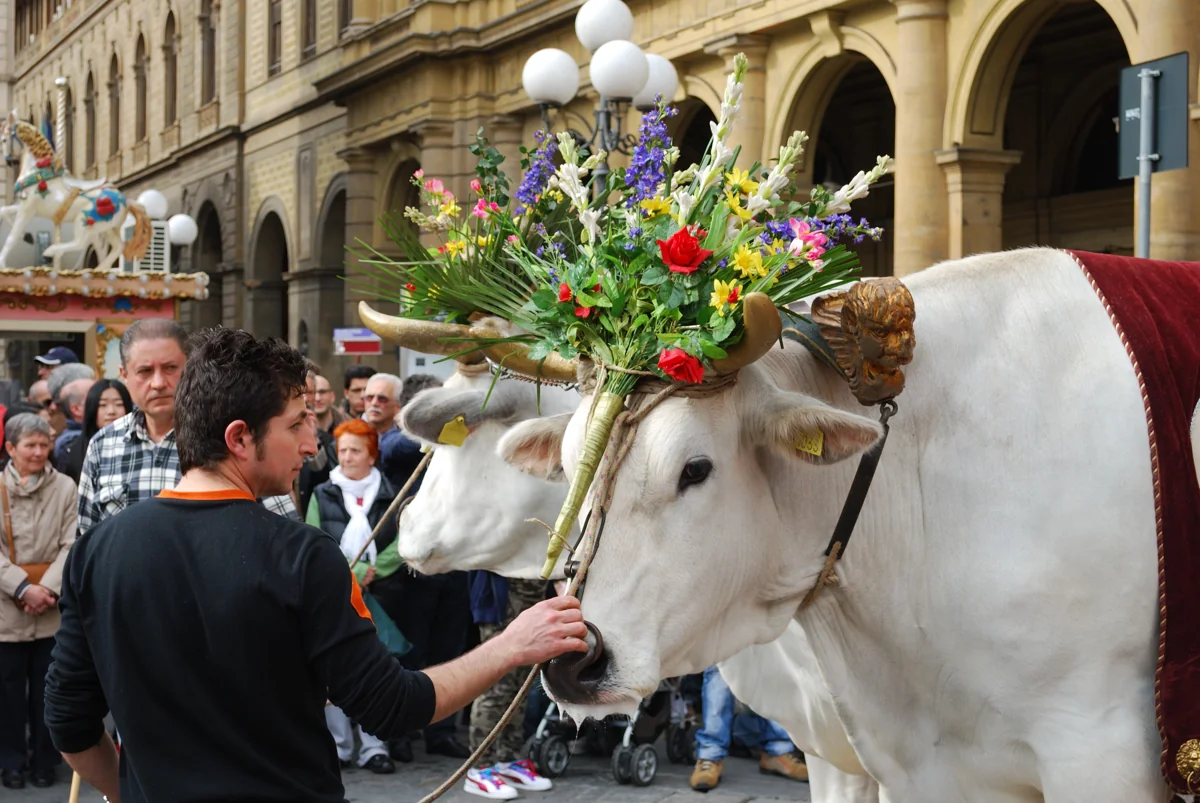
Four fixtures move the whole city. On Easter Sunday the Scoppio del Carro sends a dove-shaped rocket down a wire from the cathedral altar into a cart of fireworks in Piazza del Duomo, late in the morning — 28 March in 2027 — and the Duomo complex is closed to visitors that day. In June the four historic quarters play the Calcio Storico in Piazza Santa Croce, and the final falls on 24 June, the feast of San Giovanni, the city's patron, which ends with fireworks fired from Piazzale Michelangelo at night.
Pitti Uomo fills the Fortezza da Basso twice a year, 12 to 15 January and 15 to 18 June in 2027, and hotel rates across the centre rise with it, so fix your dates against the fair calendar rather than after booking. The fourth is quieter and in your favour: the first Sunday of every month is free at the state museums with no reservation, which also means a queue from before opening. Dates in full on the events calendar, the room-rate side on where to stay, and the closures on what is open on a Monday.
What actually goes wrong
Four things, none of them dramatic. Outside the Baptistery someone will knot a bracelet onto your wrist as a gift and then ask to be paid for it; hands down, keep walking. Pickpocketing is reported in dense crowds rather than in bad districts — the Piazzale Michelangelo terrace before sunset, the strip between the cathedral and Piazza della Signoria, the station, and the small C-line minibuses that thread the centre.
The comune publishes no crime figures by district, so we quote none. Drivers get caught by the ZTL cameras, which run Monday to Friday and on Saturday mornings: a hotel inside the zone has to register your plate on arrival, the fine amount is not published, and the notice travels through the hire company, so it does not reach you in Italy. Restaurants surprise people with the coperto, the cover charge that belongs on the menu before you sit down.
One thing that is not a problem: the tap water is drinkable, and the fontanelli, the city's high-quality drinking fountains, pour the same water refined for taste. How each approach works is on the scams page; the driving rules are on the ZTL and park-and-ride.
Photo: Alberto Lavacchi, CC BY-SA 3.0, via Wikimedia Commons (creativecommons.org/licenses/by-sa/3.0)Photo: Txllxt TxllxT, CC BY-SA 4.0, via Wikimedia Commons (creativecommons.org/licenses/by-sa/4.0)
Florence month by month
Mean daily temperature by month, averaged from the Open-Meteo ERA5 archive for 2016 to 2025 at the city centre, in Celsius with Fahrenheit underneath. The bands below the bars come from the museum calendar and the tourist-tax year, not from opinion.
9.6°C49°F
JanuaryJan
11.1°C52°F
FebruaryFeb
14.4°C58°F
MarchMar
18.1°C65°F
AprilApr
22.3°C72°F
MayMay
27.1°C81°F
JuneJun
30.4°C87°F
JulyJul
30.3°C87°F
AugustAug
25°C77°F
SeptemberSep
20.1°C68°F
OctoberOct
14.3°C58°F
NovemberNov
10.4°C51°F
DecemberDec
Comfortable for walking and climbing
Peak crowds, book slots weeks ahead
Heat above 30°C on the Dome steps
Wettest months (ERA5: 105 to 140 mm)
Daily high temperatures, thirty-year mean (Open-Meteo ERA5 reanalysis, 1995–2024). July is the hottest month at 30.4°C (87°F); November the wettest at about 131 mm, July the driest at about 28 mm. Month-by-month detail and crowd notes are on the best time to visit.
Photo: Yair Haklai, CC BY-SA 4.0, via Wikimedia Commons (creativecommons.org/licenses/by-sa/4.0)Photo: Clément Bardot, CC BY-SA 4.0, via Wikimedia Commons (creativecommons.org/licenses/by-sa/4.0)
Crowds, closures and free days by month
What the museum calendar does to each month, taken from the official pages: the first Sunday of every month is free at the state museums with no reservation, the Dome and Bell Tower have fixed maintenance weeks in November, and the tourist tax runs on the 2025 table all year.
Month
Crowds
Museum notes
Best for
January
Low
Free first Sunday at Uffizi, Pitti, Boboli, Accademia, Bargello, Medici Chapels; Boboli closes 16:30
Museums without slots selling out
February
Low
Free first Sunday; short daylight, Boboli closes 16:30
Uffizi at the 8:15 slot with empty rooms
March
Rising
Free first Sunday; Firenzecard restart option live from 1 March
Boboli and Piazzale Michelangelo before the heat
April
High from Easter
Easter Sunday: whole Duomo complex closed; free entry 25 April at Accademia and Bargello
Walking days, Fiesole
May
High
Free first Sunday; Dome slots sell out a fortnight ahead
Chianti and Val d'Orcia day trips
June
Peak
Free entry 2 June at Accademia; Boboli open to 19:10
Night of San Lorenzo 10 August: Medici Chapels open to 23:00
Early starts and late-afternoon museum hours
September
High
Free first Sunday; Palazzo Strozzi show opens 25 September
Cooking classes, Cinque Terre
October
High to falling
Free first Sunday; Santa Croce free day 4 October; Boboli closes 17:30
Best light for Piazzale Michelangelo
November
Low
Bell Tower closed 9–13 November 2026; Dome closed 16–20 November 2026; Santa Croce free 8 November; Vasari Fridays end 20 November
Uffizi and Accademia without a queue
December
Low, then holiday spike
Whole Duomo complex closed 25 December; Uffizi closed 25 December and 1 January
Markets, Mercato Centrale to 23:00
Getting around Florence: walk, tram, and the ZTL you must not drive into
You walk almost all of it. The Duomo to Piazzale Michelangelo is thirty minutes on foot, and no two sights on the must-see list are more than twenty apart. For the airport and the hill, use the tram and the bus.
Since 1 August 2026 a single urban ticket costs €2.00 (about $2.30) for 90 minutes on trams and city buses, or €3.00 (about $3.50) if you buy it on board, and a carnet of 10 is €18.20. Tram T2 links Amerigo Vespucci airport to the centre on that same ticket, so the €2 ride is the airport transfer. The 2026 fare sheet lists no 24-hour pass.
Do not drive into the centre. The ZTL cameras run Monday to Friday 7:30 to 20:00 and Saturday 7:30 to 16:00, off on Sundays and holidays, and from the first Thursday of April to the first Sunday of October a summer night ZTL adds Thursday to Saturday 23:00 to 03:00. A hotel inside the zone can register you: give your plate to reception on arrival and they transmit it to the Municipal Police.
The fine amount is not stated on the city's page. Otherwise leave the car at a Parcheggi Scambiatori park-and-ride on the edge and ride in. Routes, stops and the walking times between areas are on tram, bus and the ZTL.
Photo: Jorge Royan, CC BY-SA 3.0, via Wikimedia Commons (creativecommons.org/licenses/by-sa/3.0)Photo: Sailko, CC BY 3.0, via Wikimedia Commons (creativecommons.org/licenses/by/3.0)
What Florence costs per day
Two things the city adds to a first visit that the hotel rate does not show: the tourist tax, charged per person per night on the 2025 table that feelflorence still lists as current, and the museum tickets, which add up faster than people expect. A whole day, bed and food included, is costed three ways on what Florence costs a day.
Tourist tax per person per night (2025 table, current)
Charged by the hotel at checkout, for up to 7 nights, with children under 12 exempt. The B&B and holiday-flat rate is the same as a 3-star hotel.
Category
Per person per night
Approx. USD
1-star hotel
€3.50
$4
2-star hotel
€4.50
$5
3-star hotel
€6
$7
4-star hotel
€7
$8
5-star hotel
€8
$9
B&B room, holiday flat, tourist lease
€6
$7
Youth hostel
€4
$5
A first-timer's 3-day ticket bill
Adult prices for the tickets a first visit books, using the ticket we link where we list one and the basilica's own price for Santa Croce. The Duomo complex is not included in the Firenzecard, €85 (about $99) for 72 hours, and the Uffizi, Accademia and Palazzo Vecchio still need a reservation with it. The €28 restart adds 48 hours to an expired card.
Florence has two museum systems and they close on different days. The state museums, which means the Uffizi, the Accademia, the Bargello, the Medici Chapels and the Pitti Palace, shut every Monday. The civic museums stay open: Palazzo Vecchio runs Monday 9:00 to 19:00, and the Brancacci Chapel takes its day off on Tuesday instead. Boboli is its own case, closed on the first and last Monday of the month. So a Monday arrival goes to Palazzo Vecchio, the Duomo complex, Santa Croce and the Oltrarno streets, and the Uffizi waits for Tuesday.
Sunday inverts it. The state museums are open, and on the first Sunday of every month they are free with no reservation, which means a queue at the gate from before 8:15. The Cathedral nave, free on every other day, is closed to visitors on Sundays for services, and the Dome opens late, 12:45 to 16:30. The Museo di San Marco, with Fra Angelico's cells, belongs on any museum list, but its official page could not be reached when we checked, so no price or hours are printed here. Every museum with its hours and closed days is on what is open on a Monday.
Out of the city for a day: three routes that work by train
Pisa is an hour by regional train and Siena an hour and a half, so a single town is a DIY day. Three towns in a day, or the Cinque Terre with its change at La Spezia, is where a coach earns its seat. The train column for every destination is on Pisa, Siena and Chianti by train or by tour.
from €49Best seller
Florence: Pisa, Siena and San Gimignano Day Trip with Lunch
listed at $56.76
★★★★★★★★★★4.6(11,493 reviews)· 12 - 12.5 hours
12-hour coach day to Pisa, Siena and San Gimignano with a winery lunch; guided Siena walk and cathedral only on the English option. Eight languages.
Half-day coach trip to two Chianti wineries with 3–4 wines at each plus bread, oil and salami; English or Italian, small-group dinner option. No lunch.
Florence: Cinque Terre Day Trip with Optional Hiking or Pisa
listed at $63.71
★★★★★★★★★★4.9(5,886 reviews)· 12 - 13 hours
12–13-hour day visiting all five Cinque Terre villages with park and train tickets, optional Corniglia–Vernazza hike, or three villages plus Pisa. English.
Prices, ratings and details are the platform's own. Dollar figures are the listed prices. The platform bills in your account's currency.
Pick a neighbourhood before a hotel
Every area worth sleeping in is under twenty minutes' walk from the Duomo, so the choice is about evenings and noise, not distance: the Centro Storico for a first visit, Santa Maria Novella for train days, the Oltrarno for dinner streets that empty of day-trippers at six. The six areas are compared, with tourist tax and the ZTL rule for drivers, on neighbourhoods compared by walk time to the Duomo.
Six Questions Before You Go
The things visitors ask before they book anything, answered from the pages that own them.
How safe is Florence for a visitor?
Violent crime is rare and the real risk is pickpocketing in three predictable places: the queue outside the Uffizi, the crowd on Ponte Vecchio and the platforms at Santa Maria Novella. The friendship-bracelet approach near the Baptistery is the scam you will actually meet. The scams, and the emergency numbers.
Will a transport strike stop my day?
Italian strikes are announced at least ten days ahead on the Ministry's register at scioperi.mit.gov.it, and the law protects commuting windows: regional trains still run 06:00–09:00 and 18:00–21:00, city buses 04:15–08:14 and 12:30–14:29. Plan inside those bands and you lose an afternoon, not a trip. How to read a strike notice.
Can you drink the tap water?
Yes. Publiacqua treats about 90 per cent of the city's supply from the Arno at the Anconella plant and publishes the analysis; the Florence readings show pH 7.6, nitrates at 4 mg/L and sodium at 26 mg/L. Ask for acqua del rubinetto and it is free. Where the free fountains are.
Is a short stay here worth the trip?
Two nights buys the Duomo complex, one of the two big galleries and an evening in the Oltrarno, which is a real visit rather than a rushed one. Three nights is where the second gallery and a hill town fit without cutting anything. The honest case, and against.
What does a day here actually cost?
About $118 (€101) a person on a careful day, $246 (€210) mid-range and $358 (€306) comfortable, sharing a double room midweek. The bed is roughly two thirds of the careful day; the six tickets a first visit books come to about $205 (€175) in total. Three budgets, itemised.
Which tours are worth paying for?
The ones that buy something you cannot walk up and buy: the Vasari Corridor, which has no public door, the guide-only passages inside Palazzo Vecchio, and any day in Chianti, where no railway goes. Every tour compared, with what each includes.
Florence questions people ask before they land
What is Florence in Italy famous for?
The Renaissance happened here: Brunelleschi's Dome, Michelangelo's David, Botticelli's Birth of Venus in the Uffizi, and the Medici palaces that paid for it all. Add leather, the Ponte Vecchio goldsmiths and the bistecca. The eight places on the must-see list are where those things are, in walking order.
What must you see in Florence on a first visit?
Eight places carry a first trip: the Duomo complex, the Uffizi, the Accademia, Palazzo Vecchio and Piazza della Signoria, the Ponte Vecchio, Santa Croce, Pitti Palace with the Boboli Gardens, and the view from Piazzale Michelangelo at sunset. They sit in the must-see list in walking order, and only three of them need a timed slot booked before you fly.
Is Florence walkable?
Yes, end to end. Santa Maria Novella station to the Duomo is about thirteen minutes on foot, the Duomo to the Uffizi about nine, and the whole historic centre is a walk of roughly half an hour across. The two things that are not walks are Piazzale Michelangelo, which is a climb or bus 12 and 13, and the airport. Tram, bus and the ZTL has the routes and the walking times between areas.
Can you wear jeans in Florence, Italy?
Yes. The rule that matters is the dress code at the Cathedral and Baptistery: shoulders and knees covered, no flip-flops, checked at the door. Jeans pass. Shorts above the knee do not. Details for each monument are on the Duomo complex page.
Do I need to book the Uffizi and the Accademia in advance?
What is the weather like in Florence month by month?
Winters are mild and damp, summers hot and still. On the thirty-year mean January averages a high of 9.6°C (49°F), July is the hottest month at 30.4°C, and November is the wettest at 131 mm across about thirteen rainy days. April to May and late September to October sit at 18–25°C. The best time to visit has the full month-by-month table.
What is Florence called in Italian?
Firenze, pronounced fee-REN-tseh. It is the name on every station board, road sign and train ticket, so look for Firenze Santa Maria Novella when you book a train, and Firenze Peretola for the airport. The getting around page has both.
Florence on Video: Three Guides Worth the Time
Three filmed guides to the city — one practical, one classic, one planning-focused. Between them they cover what the written pages here cannot: the pace of the streets and the distances between the sights.
43 Tips I Wish I Knew Before Visiting Florence, Italy
Practical tips on tickets, timing and transport, gathered from a full visit.
Video: Camden David
Florence: Heart of the Renaissance
A tour of the Renaissance city and the works that made it, from a long-running travel series.
Video: Rick Steves' Europe
How to Plan a Trip to Florence, Italy | Florence Travel Guide
How to structure a first trip: how many days, which museums to book, what order.
Video: Sharing the Road
Videos load from YouTube only when you press play.
The one ticket to book before anything else
Timed entry to Michelangelo's David, rated 4.6 from more than 21,000 reviews on the platform, with free cancellation up to 24 hours before.
€28 with the audio app included, and free cancellation up to 24 hours before.
The office, phone and email above belong to the city's own visitor service, published on the official tourism site and checked on 2026-08-29 — they are not this site's contact details. To reach us, use the contact page.
 Florence City Guide
 from €28
Best seller